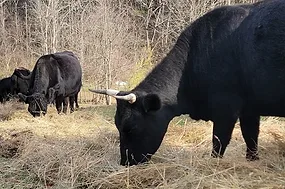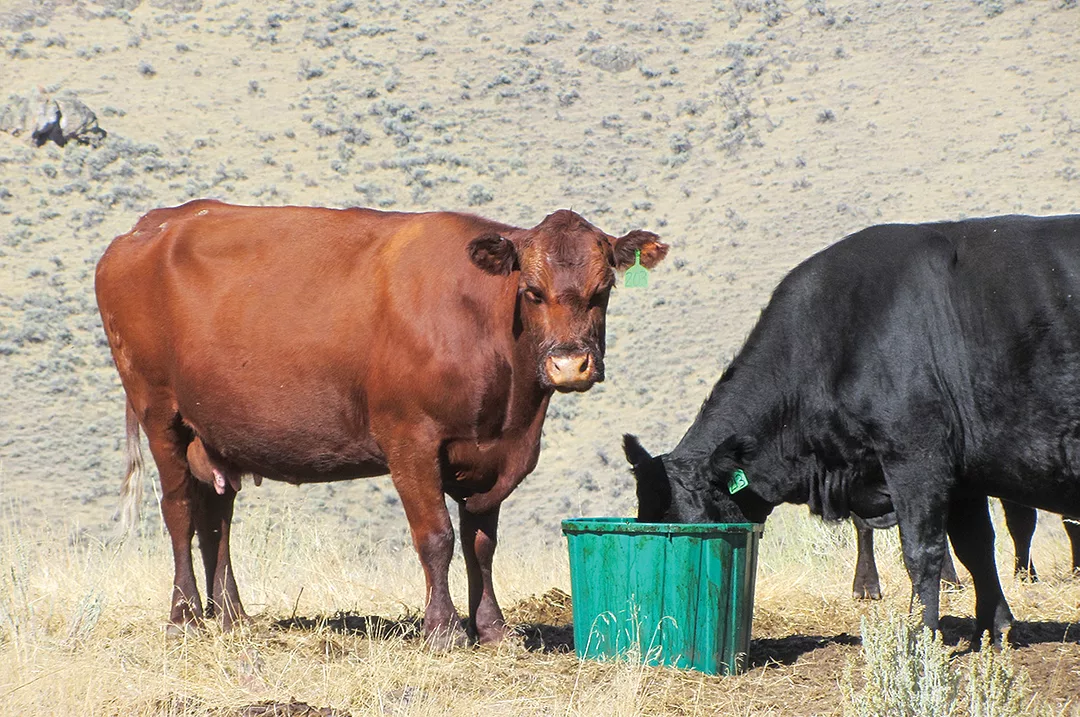
For optimum health, cattle diets need adequate amounts of protein, energy, vitamins and certain minerals. Sodium, chlorine and potassium are crucial to maintain fluid balances in body tissues and blood. Sodium chloride (salt) should always be provided; cattle need more salt than what occurs in forages. Bone growth and milk production depend on calcium and phosphorus.

Calcium, phosphorus and magnesium are called macrominerals because they are required in fairly large amounts. Deficiency is generally not a problem, as these minerals are usually present in high levels in many feeds. Exceptions occur when high-producing dairy cows become temporarily short of calcium at calving and suffer from milk fever, when cattle are on dry roughages for long periods and become short on phosphorus or when cattle grazing lush pasture become short on magnesium and develop grass tetany.
Copper, iron, iodine, manganese, selenium and zinc are only needed in tiny amounts and are called microminerals or trace minerals. Reproduction, skeletal development in young animals, optimum health and strong immunity depend on adequate levels of these trace minerals. Some soils and plants are short on certain trace minerals, leaving feeds deficient. In these situations, cattle may suffer various ailments.
Maggie Justice, an assistant professor and beef cattle systems extension specialist at Auburn University, says that since minerals are such a small part of the total diet (compared to energy and protein), they are sometimes overlooked.
“Here in the Southeast, pastures are amazing, and we can graze almost year-round, but there are some things they may lack,” says Justice. “It’s important to know what’s in your pasture or what your hay provides. We might just put out a standard salt/mineral mix, but in some situations may need a specialty mix if we lack certain minerals.
“Some soils and forages here can be low in key minerals like phosphorus or trace minerals like selenium,” she continues. “We also need to think about mineral interactions and antagonists. Iron and sulfur can tie up copper, for instance.”
Sulfur can be an issue with poultry litter fertilizer or become a problem in summer water supplies if hot weather evaporates ponds, with more accumulation of dissolved solids like sulfur. In other regions of the country, molybdenum in the soil can also tie up copper and result in copper deficiency in cattle.
One of the first symptoms noticed with copper deficiency is that hair color fades. Black cattle have a reddish tinge, and red cattle become lighter red. Copper deficiency can also show up as reproductive failure (more cows open or slow to cycle) and higher incidence of sickness, since copper is crucial for a strong immune system.
Calcium and phosphorus
“When balancing rations, one of the first things I think of is calcium-phosphorus ratio and whether cattle need more [or less] of one of those crucial minerals to have the correct balance,” says Justice. “With our warm-season perennial grasses, especially bermudagrasses and bahiagrasses, we need to watch that balance. Those grasses are great for cattle production in the Southeast but can be lacking in phosphorus.”
Signs of deficiency, especially with phosphorus, include poor growth and low conception rate.
“We can help prevent this with specific mineral supplementation or just free-choice minerals,” says Justice. “Dried distillers grains, corn gluten, etc., can be rich in phosphorus and can help, but we may not realize there’s a problem until we discover the cattle are not gaining as many pounds as they normally do. In today’s market, those few pounds can be worth a lot, especially added up across the whole group of animals. Even one or two more open cows is also a big deal; each open cow represents a huge loss.”
Magnesium
Magnesium is another crucial mineral that must be there in adequate levels.
“This is a huge issue for us in the spring, especially in cool-season annual pastures like ryegrass or small grains,” says Justice. “We see grass tetany in cows if these forages are short on magnesium.”
If these grasses are lush and green but growing slowly, especially after cool weather in spring or fall, they may be short on this important mineral.
Justice cautions that fertilizing these pastures can worsen the risk because it works as an antagonist with magnesium absorption. At high risk are lactating cows; their needs for magnesium are higher than for young calves or dry cows. Signs of grass tetany from a magnesium deficiency include muscle twitching, staggering and the cow going down and being unable to get up.
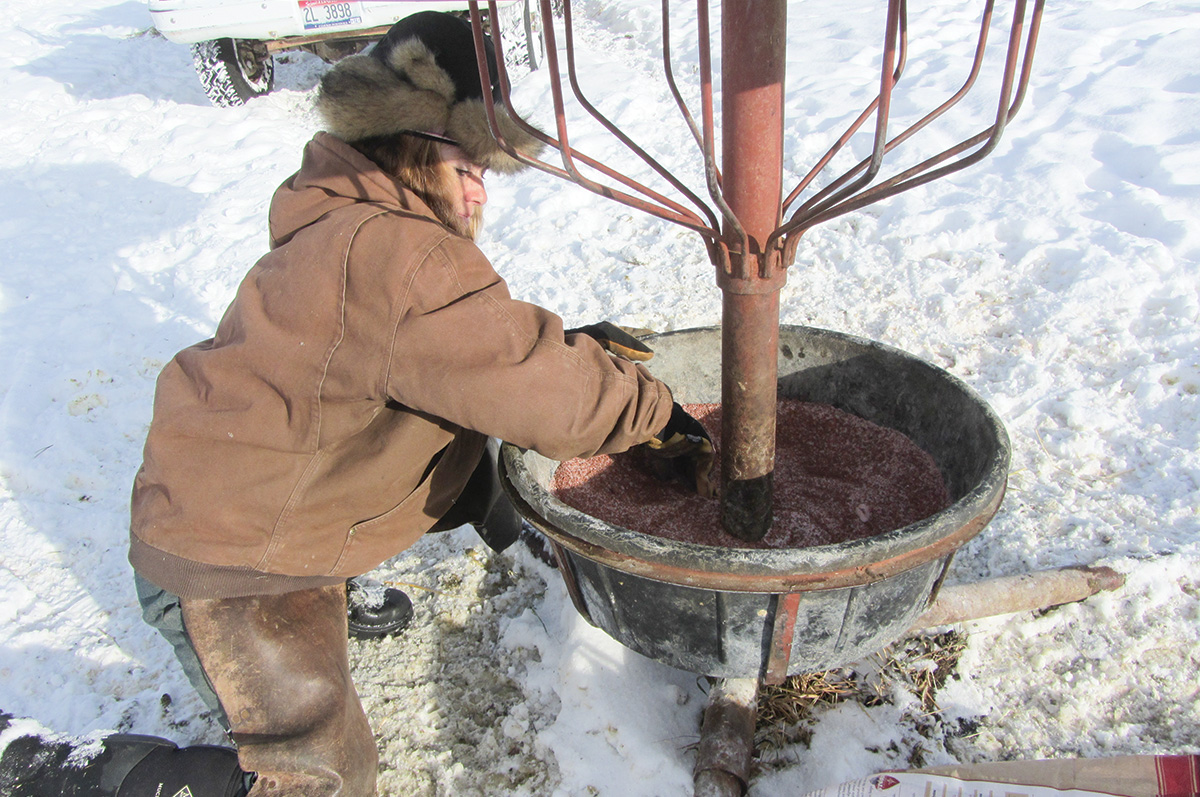
If cattle are provided with adequate salt with necessary minerals, they are more likely to consume it. Image by Heather Smith Thomas.
“This is an easy fix if you make sure cows are consuming a high-magnesium salt-mineral mix,” Justice says. “I tell producers they can’t just put it out in March; they should start providing it by the end of January or early February so the cows already have enough and are accustomed to eating it. The high-mag mineral is bitter.”
It helps if producers put the magnesium supplement out early, mixed with a lot of loose salt so they will consume it. Cattle always need salt, and it’s even more necessary on certain pastures. If they have adequate salt with the mineral, they are more likely to eat it.
Selenium
Selenium deficiency is not a problem everywhere, but in areas where soil is short on this mineral, it can be a big problem.
“We have pockets throughout this part of the country where soils are deficient,” Justice says. “One of the big worries in calves is white muscle disease. In cows, deficiency can lead to more incidence of retained placenta and more stillborn calves.”
Forage testing
It pays to have your soils and forages tested. Even within the same region, mineral profiles may be different. A good mineral program is one of the cheapest insurance policies and should be consistent, not just now and then.
Karl Hoppe, an extension livestock specialist at North Dakota State University, says most grasses are usually balanced for calcium and phosphorus, but any time you add a more concentrated feed to the ration (grain or a co-product), phosphorus levels will be high.
“If grass is mature, phosphorus levels might be low,” says Hoppe. “If we feed alfalfa, the calcium will be high. It’s important to balance the ration.”
If cows are on mature pasture with low phosphorus (often the case on the northern Plains), they may have lower conception rates or less ability to maintain pregnancies. In these situations, producers need to add an adequate amount of phosphorus.
“In our region, copper is short,” says Hoppe. “Selenium – depending on where you are – could be either short or toxic [too much]. The problem with high levels of selenium in the soil is there’s nothing you can do to get rid of it. All you can do is not graze those areas.”
Toxic levels of selenium can cause loss of hair and hooves, and even death.
“Iodine is another important trace mineral,” Hoppe says. “I’m surprised at how many people think plain white salt is adequate for cattle on pasture. Iodine levels in soil here are too low, and we need to use iodized salt. Some wonder if they should use EDDI trace mineral blocks, [which are] marketed to help control foot rot.”
Hoof health depends on trace minerals, and if you have foot rot problems, iodine is helpful because it has antiseptic properties.
Ethylenediamine dihydroiodide (EDDI) mineralized salt contains more than twice the iodine, iron, manganese and zinc of standard trace mineralized salt. EDDI is a water-soluble salt often used in pet food and cattle feed because it has high bioavailability.
“If you don’t have a problem with foot rot, however, the cheaper regular mineral salt blocks are fine,” Hoppe says. “You can use iodized white salt or buy a mineral mix to add to some loose salt.”
In some situations, to figure out a mineral problem, you may need to talk to a cattle nutritionist.
“Most veterinarians are not nutritionists; they usually only get involved in the disasters – the animals that get sick or die,” Hoppe says. “If you ask them how to remedy the situation, they may not have the best recommendations simply because they don’t have as much training in nutrition, just like a nutritionist doesn’t have training in health issues.”