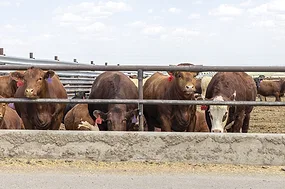
Feeding costs, and hay in particular, are among the greatest inputs in a beef cattle operation. Hay is also one of the most commonly wasted resources. Losses during storage and feeding can easily exceed 25%, tightening profitability margins and stretching winter feed supplies thin. With careful attention to utilization, producers can significantly reduce waste and get more nutrition from every bale.
The first step to reducing hay waste begins well before it’s fed. The method by which it is stored has a major impact on both quantity and quality. When stored outside, bales in contact with the ground and exposed to rainfall experience spoilage and nutrient loss, particularly in the outer layers. Storing hay bales on a well-drained surface such as gravel, pallets or old tires prevents moisture from being absorbed from the soil. Arrange bales in single rows with space between for air circulation. If the round sides of bales are too close together, moisture can get trapped in between them. Whenever possible, covering with tarps or storing under a roof reduces weather damage even further. Research has shown that covered storage can reduce dry matter losses by 10% to 15% compared to uncovered bales stored on bare ground.
Feeding method is another major factor in hay utilization. Unrolling hay on the ground may seem convenient, but it can result in some waste as cattle trample and bed on it. However, if hay is unrolled daily or access to unrolled hay is limited using temporary fencing, much like strip grazing, this loss is significantly less. Using a properly designed hay feeder such as cone, ring or cradle-style feeders can limit losses to less than 10%. If feeding on the ground is necessary, limit access time to what cattle can consume in a few hours and unroll smaller portions at a time. Feeding on a firm surface, such as a feeding pad or dry area, also helps prevent contamination and waste.
Finally, feeding the right hay to the right class of cattle ensures nutrients are used efficiently. Save your best-quality hay for lactating cows or growing calves, and feed lower-quality bales to dry or midgestation cows with lower requirements. Forage testing and creating a hay inventory helps you make these decisions and supplement only when necessary.
Reducing hay waste is one of the simplest ways to stretch feed supplies and lower winter feeding costs. With better storage, controlled feeding and strategic hay allocation, producers can improve efficiency and profitability without increasing inputs.