Based on new data from the USDA Economic Research Service (ERS), butter consumption hit a new record, while yogurt consumption showed the strongest overall growth, followed by cottage cheese and regular ice cream in 2024. Cheese consumption remained unchanged from a record high the previous year and fluid milk declined only slightly.

Annual data from USDA ERS, which began tracking annual consumption of dairy products in 1975, shows U.S. per capita consumption of dairy products (on a milk-equivalent, milkfat basis) decreased 6 pounds per person from 2023, to 651 pounds in 2024 (Table 1).
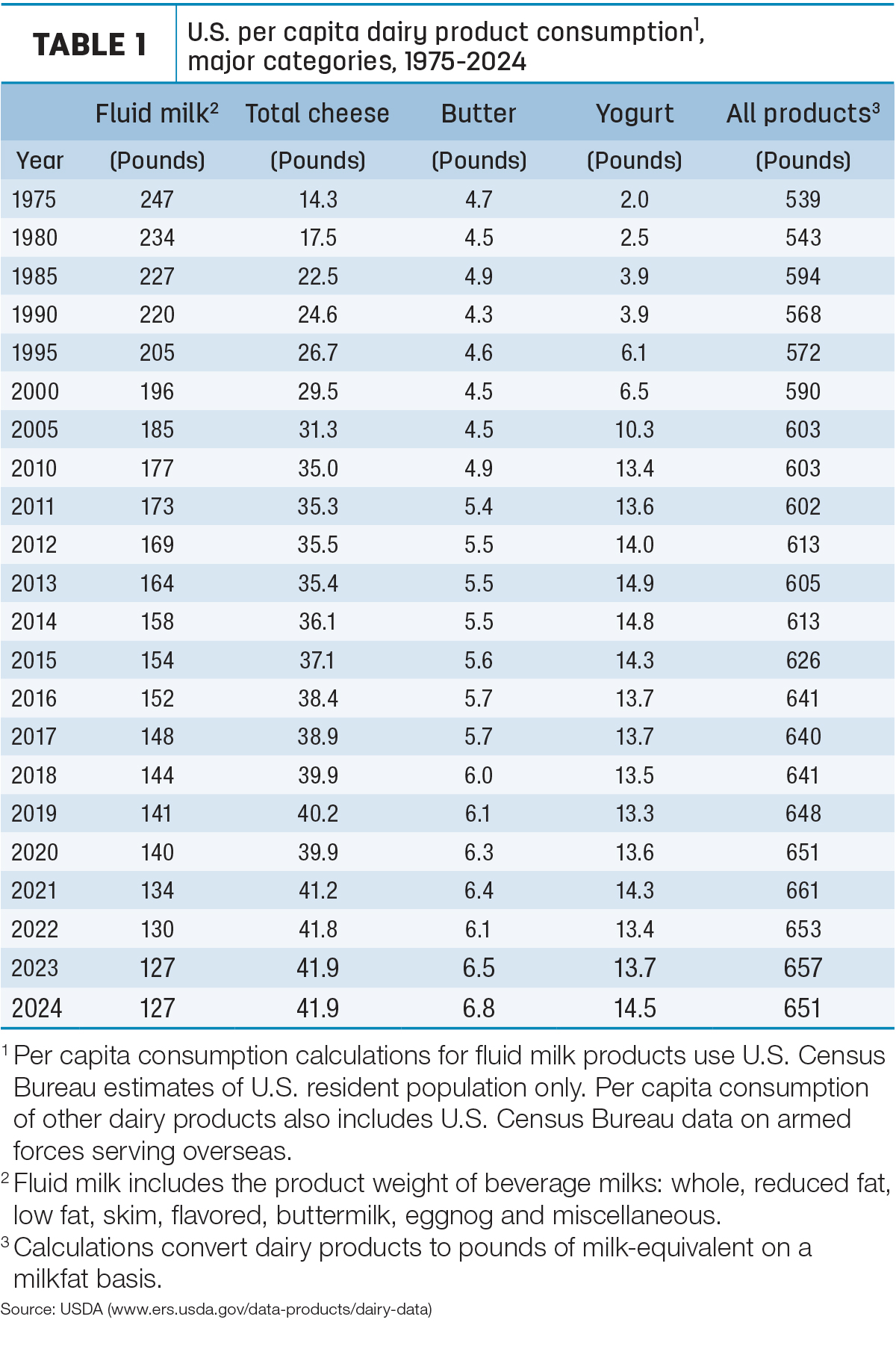
Per capita dairy product consumption has risen 3 pounds in the past five years, from 648 pounds in 2019, and was up 83 pounds since 1990. Overall, USDA data show Americans’ per capita consumption of dairy is up 0.6% over the past five years, 8% over the past 15 years and 12% over the past 30 years.
U.S. consumers continue to eat more dairy in the form of butter and yogurt. After years of decline, fluid milk held steady this year and cheese consumption was unchanged.
Cheese consumption stable
Cheese consumption remained unchanged at 41.9 pounds per person after seeing record-setting growth in the past three years.
Consumption for American-type cheeses decreased to 16 pounds per capita in 2024, with a small decrease in cheddar offset by a slight increase in other cheeses. Consumption of Italian-type cheeses remained the same at 15.9 pounds per person. It marked the fourth straight year that per capita consumption of American cheeses surpassed Italian cheeses, reversing a decade-long period that those categories were flipped.
Consumption of Swiss, blue, brick, Hispanic and cream/Neufchatel cheeses were unchanged, while Muenster was slightly higher than the year before. Cottage cheese consumption increased over last year to 2.4 pounds per person for the first time since 2009, according to USDA records.
Consumption of process cheese and cheese foods and spreads added another 8.1 pounds, which decreased 0.1 pound from last year.
Butter, yogurt consumption increases
Per capita consumption of butter set an all-time high in 2024, reaching 6.8 pounds, a 0.3-pound per-person increase over 2023. After posting declines for most of the last quarter of the 1900s, annual per capita butter consumption has now increased 2.3 pounds since 2000.
The consumption of yogurt (other than frozen) increased in 2024 to 14.5 pounds per capita, up 0.8 pound and a 6% increase from the previous year. It remains 0.4 pound less than the peak in 2013 but has grown 58% in the past 20 years.
Per capita consumption of other dairy products was mixed. Americans indulged in more regular ice cream (12 pounds) and less low-fat and nonfat ice cream, frozen yogurt and sherbet. Consumption of dry products (milk and whey powders) were mostly unchanged from 2024.
Fluid milk holds steady
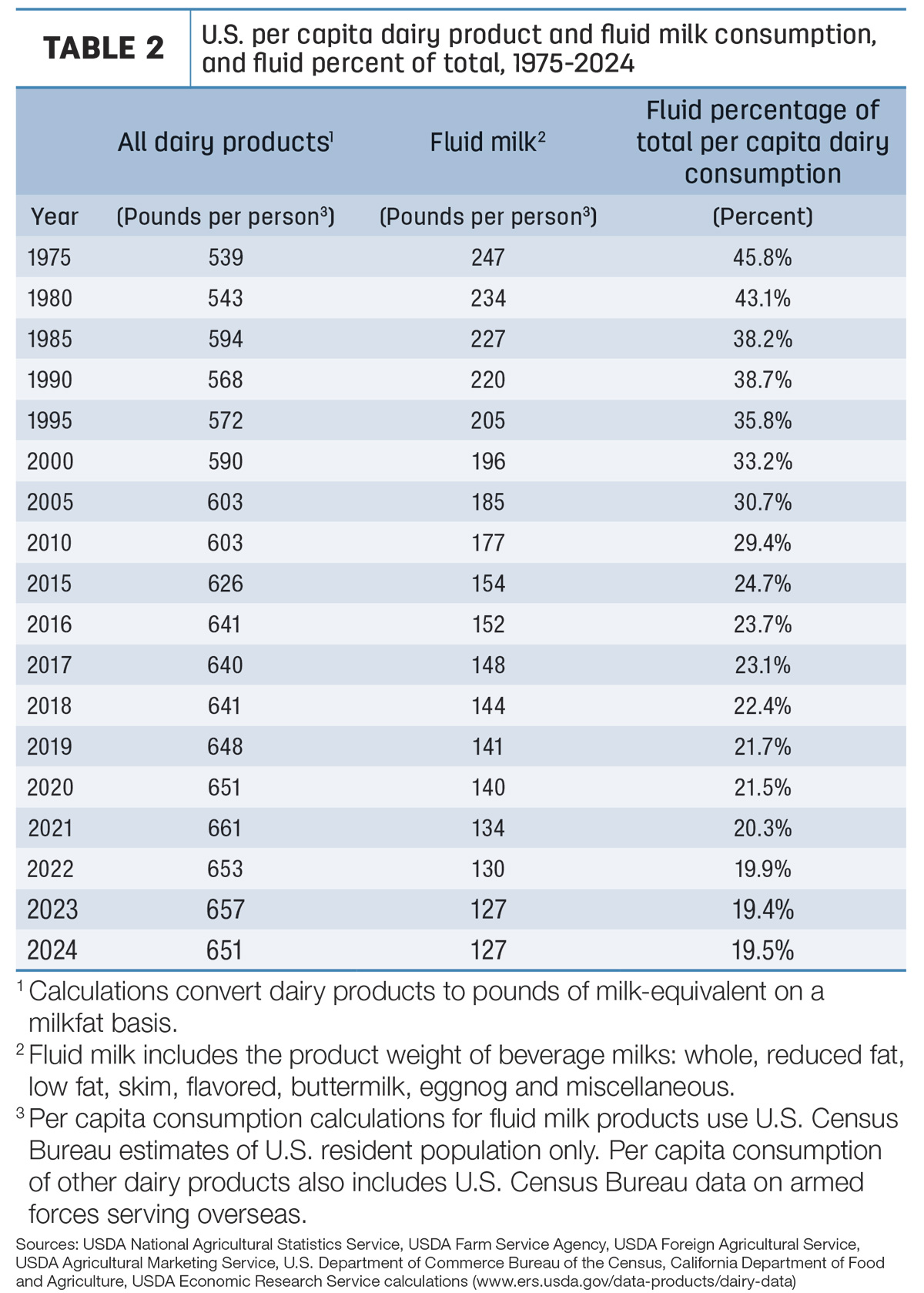
U.S. per capita consumption of fluid milk was estimated at 127 pounds in 2024, down 0.1 pound from 2023 (Table 2). Longer-term, per capita fluid consumption was down 69 pounds (roughly 8.1 gallons) since 2000.
As a percentage of total U.S. dairy product consumption, fluid beverage milk slipped from nearly 46% in 1975 to 19.5% in 2024.
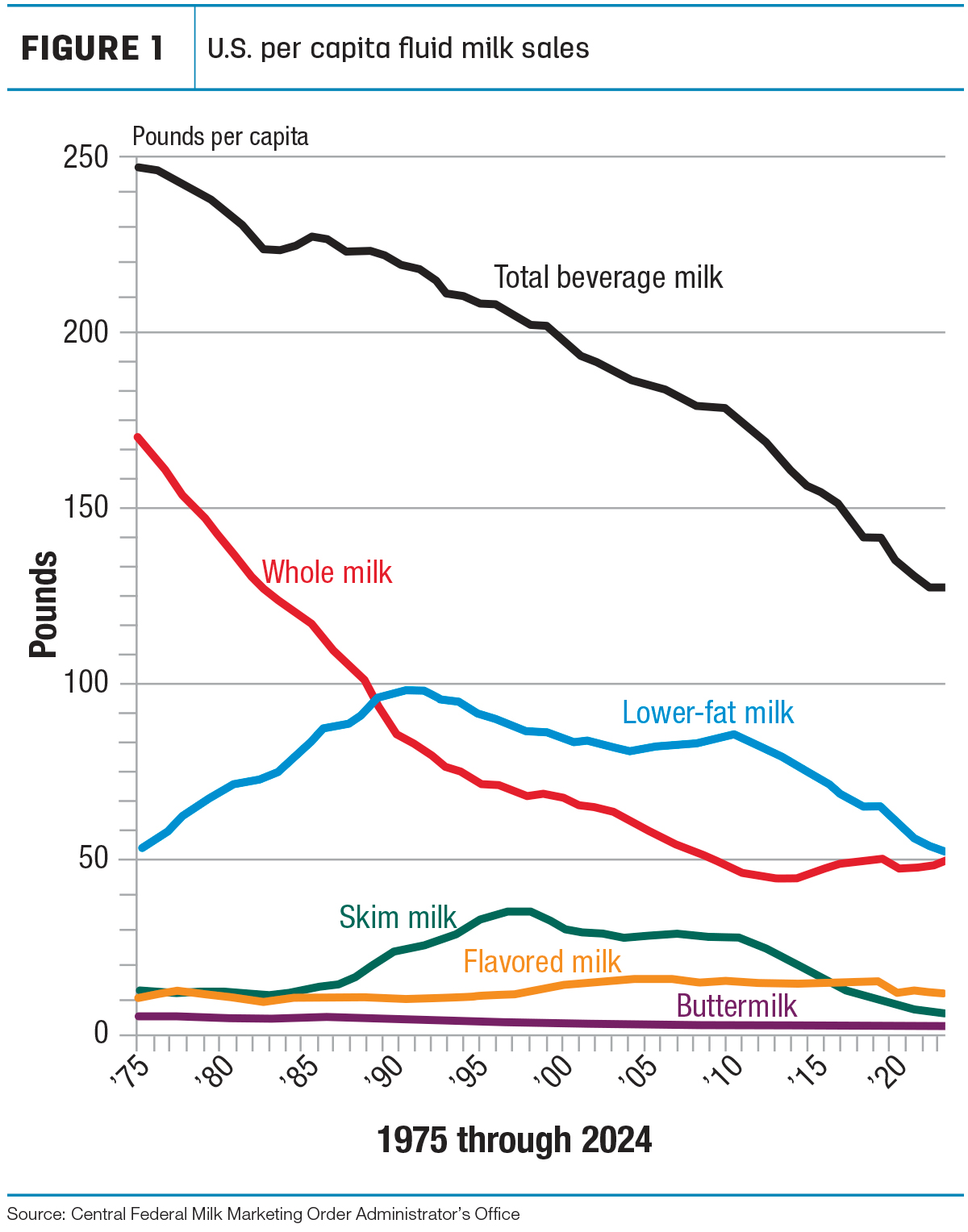
U.S. consumers continued last year’s trend in which sales of whole milk increased from the previous year (Figure 1). Total U.S. sales of whole milk rose to 16.7 billion pounds, up 490 million pounds from 2023. Sales of reduced-fat (2%), low-fat (1%) and skim milk declined a combined 743 million pounds. Flavored milk other than whole and buttermilk also slightly fell. Those declines were only partially offset by increased sales of flavored whole milk and eggnog. All told, fluid product sales were down 265 million pounds from 2023.
Organic milk represented about 6.9% of all fluid milk product sales in 2024, down 0.8% from 2023.
Serving the fluid market, the number of fluid processing plants in the U.S. decreased in 2024 to 441.
“American families continue to consume dairy foods at near-record levels because dairy delivers what matters most today – flavor, affordability and complete nutrition,” said Michael Dykes, president and CEO of the International Dairy Foods Association in Washington, D.C. “Consumers are leaning into high-protein foods, gut-healthy options and simple, wholesome ingredients, and dairy meets every one of those needs. Surging sales of yogurt and cottage cheese only underscore the transformation happening for U.S. dairy. Dairy was perfectly made for this moment, and you can see that reflected in Americans consuming more of their favorite dairy year over year.”