Despite multimillion-dollar scientific efforts and closures at the Mexican border to keep it out, the New World screwworm (NWS) is still moving northward.

Analysts, governments officials and state health specialists all sounded the alarm of the possible arrival of the devastating pest able to infect animals and people, and most certainly threaten the U.S. livestock industry.
While NWS is currently not present in the U.S., speakers and officials at the Texas & Southwestern Cattle Raisers Convention in Fort Worth, Texas, March 28-29, gave indications the spread is being successfully kept at a distance away from the U.S. – for now. But plans are in motion for its arrival, possibly as early as this summer.
U.S. Secretary of Agriculture Brooke Rollins, during a brief press gathering at the conference, said the screwworm is still approaching the U.S. border after long attempts to keep it out.
“Every model showed the New World screwworm being in Texas by last summer, so against all odds, we have been able to keep it, with a few exceptions, right around 200 miles south of the Texas border. But there's no question, when you look at the heat maps, that it is in large portion moving up.”
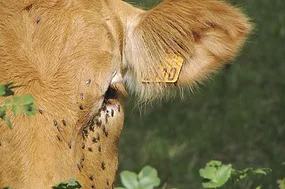
NWS is a parasitic fly whose larvae burrow into the flesh of warm-blooded animals, including cattle, sheep and other livestock, including wildlife and some rare cases in humans. Infestations can rapidly become fatal if not treated, leading to profound animal welfare concerns and potentially severe economic losses for ranchers.
Meanwhile, keeping NWS out of the U.S. also requires keeping 1.2 million head of live Mexican cattle imports out of feedyards and packers. So just how long will the border stay closed?
“The closest the screwworm has gotten to the Arizona border is about 800 miles,” she said. “So we're currently evaluating a potential phased-in strategy. We obviously will not be opening all four ports anytime soon, but there is a realistic conversation that's currently happening that's looking at that port about 800 miles from the closest case. I expect an announcement either way on that, perhaps within the next two to four weeks.”

TR Lansford is a co-director for the Texas Animal Health Commission. Image by David Cooper.
T.R. Lansford, a deputy director for the Texas Animal Health Commission, told producers at TSCRA they should be vigilant in what they see with livestock and wildlife in the coming months.
“Certainly as awareness of New World screwworms is increased, I think it's important for us all to be thinking about what those clinical signs are, and certainly as we think about collecting samples from potential cases of New World screwworm meiosis, to think through what we might see or what we might encounter that will tip us off, that we need to be thinking about collecting maggots out of from a wound.”
Data from a federal website show updates twice a week from cases reported to the Mexican ag department. As of March 30, total cases in Mexico were at 19,083 since November 2024, with 1,369 active cases. The closest the fly had migrated was within 146 miles of the U.S. border affecting a 3-year-old swine in the state of Tahmaulipas below southern Texas, according to Rear Adm. Michael Schmoyer, associate administrator for USDA Animal Plant Health Inspection Service, and the agency’s NWS directorate director.
Schmoyer said that more than 90% of the cases in Mexico have been related to cattle movement – not the path of flies themselves, especially since screwworm flies don’t fly very far and can easily find open wounds in mammals, not just cows and calves but also swine and canines. Wildlife infections are also a significant concern among U.S. officials.
Rollins and the USDA last year issued a five-pronged plan to block the screwworm path into the U.S., protect the border, maximize preparation for treatment and push initiatives in the cattle industry. The plan came after a series of attempts to open the U.S. border to Mexican live cattle imports were cancelled, keeping the border closed since. The U.S. has traditionally utilized between 1.4 million to 1.6 million head of imported Mexican cattle annually in feedyards that add to the beef supply.
The USDA opened an $8.5 million dispersal facility near Moyer Air Force Base (AFB) in Ediburgh, Texas. That was followed by the announcement of a $750 million facility to mass produce 300 million irradiated flies weekly, also at the Moyer AFB site. The dispersal facility began its activity in February. The fly production facility is about to break ground in April, Rollins said, and is pushing to open in early 2027.
Schmoyer said the dispersal of sterile flies is the key tactic to halt approaching screwworm in the more humid regions of the Mexico border states.
“In the ’60s, ’70s, ’80s and ’90s, we needed about 500 million flies a week to be able to push New World screwworm out of the United States down through Mexico to the Darien Gap. We currently have 100 million a week. I can say the production is going on a daily basis.
“The sterile flight dispersal that we do in conjunction with Mexico is the most effective intervention that we have going on right now. We also have the Metapa facility in Mexico that is a fruit fly facility APHIS has provided 6 million dollars for renovation.” Together all the planned facilities should be able to produce 500 million flies by next year, he said.

Lee McGlamery, an analyst for MP Agrilytics, speaks to producers at the TSCRA conference. Image by David Cooper.
Losing Mexican cattle supply
As USDA keeps working to keep flies and infected animals out of the U.S., analysts are concerned how a closed border to Mexican live cattle imports will continue to affect beef prices, feedyard capacity and overall production.
“Our internal bias is: We probably won't see Mexico open this year for a number of reasons,” said Lee McGlamery, an analyst for MP Agrilytics during a presentation at TSCRA. “It makes the most sense from a mitigation standpoint. Let's wait until we've got the fly facility – the production facility – open. That's a year out, and there's lots of other issues.”
McGlamery said the Mexican beef industry may now seize the opportunity to rebuild its own feedlot sector while the border is closed.
“There's just no incentive for Mexico to open the border," he said. “I see zero upside for the Mexicans doing that, and the longer we go down this road, the more likely we see them build more bunks, to add more packing capacity and become more of a competitor to the United States, as opposed to exporters.”
"I don't think [that market] is completely lost. But my concern is, if we used to import 1.2 to 1.4 million head from Mexico, a big number now might be half of that. My real concern is, we may be looking at 200,000 to 300,000 a year."
Lubbock Feeders, a 50,000-head facility that’s operated for 70 years, announced its pending closure due to declining inventory coming from Mexico. McGlamery said other facilities in the region catering to Mexican imports are facing similar struggles.
Schmoyer said the NWS fly has moved with cattle in humid climates, but the spread has not crossed into western Mexico with its higher mountain ranges and drier climate. But there are still isolated cases in the arid mountain ranges being discovered.
While the USDA is looking at a possibility to opening the border at Douglas, Arizona, that’s not to say cases aren’t being seen in central mountain ranges.
“It’s because somebody brought the fly there totally related to cattle movement,” Schmoyer said. “So we have the capability to prevent that.”
Schmoyer said Rollins has indicated “If it does come here, and we hope it doesn’t, we are totally prepared. And I absolutely agree with her on that. Because we have the capability to do something and Mexico did not. They did not have the capability to do cattle movement control when this first came.”