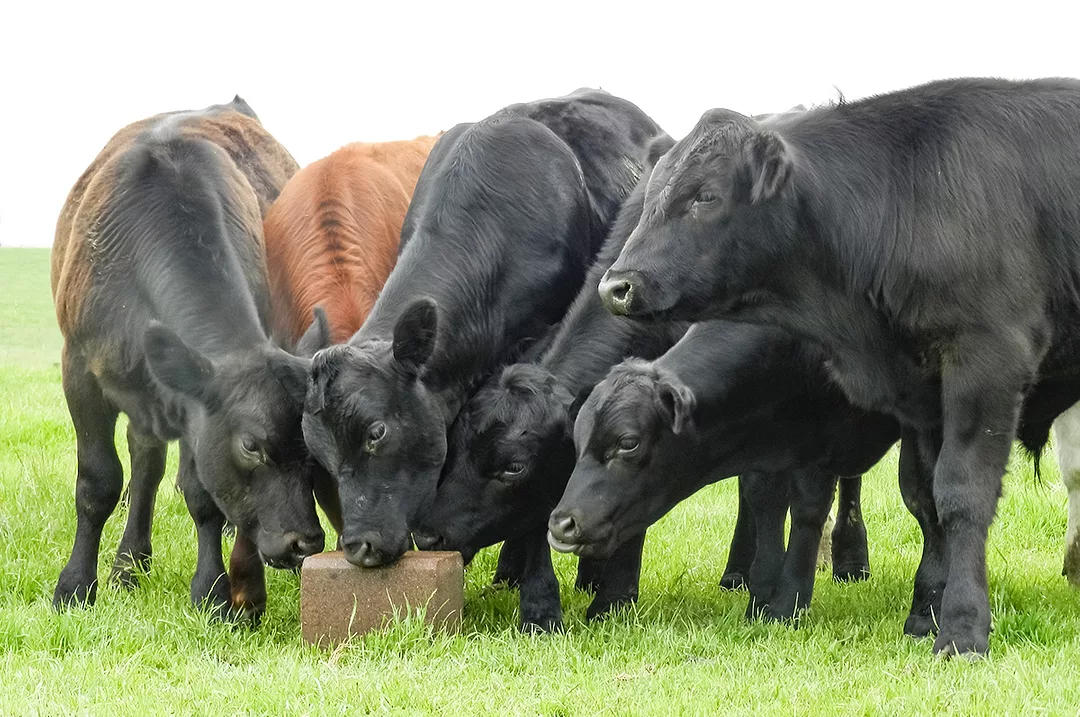
Salt has been part of cattle supplementation programs for generations. It’s inexpensive, familiar and, most importantly, an effective way to manage intake of self‑fed supplements. For decades, producers have relied on salt to encourage consumption of otherwise bitter-tasting minerals or to limit intake of highly palatable plant-based protein supplements (alfalfa, soybean, canola meals, etc.). Yet in recent years, a growing number of ranchers across the West have begun asking a similar question: Why, when salt is offered in multiple forms, do cattle suddenly stop consuming their mineral supplement?

The answer lies in how cattle respond to salt when it appears in more than one part of the diet. While salt is a useful intake modulator, it is not a neutral ingredient. When cattle encounter salt from several sources, whether from white salt (loose or block), a salt‑limited protein supplement, a salt‑based mineral or even naturally salty stock water, they adjust their behavior in ways that can undermine a supplementation program. What looks like a simple mineral refusal is often a predictable physiological response to an overabundance of sodium in the total diet.
Recent research from Montana State University sheds light on this pattern. In a two‑year grazing study, yearling heifers were offered a 25% salt‑limited protein supplement, a 25% salt‑based loose mineral or both together. When the protein and mineral were offered simultaneously, mineral intake dropped well below the recommended target, even though cattle continued to consume the protein supplement at or above target levels. The cattle were not rejecting the mineral because they didn’t need it; they were simply already receiving salt from the protein supplement and reduced their appetite for additional salt accordingly. This mirrors what many ranchers observe on the ground: Stacking salt sources often suppresses mineral intake, undermining their mineral nutrition program.
This behavior is rooted in basic physiology. Cattle have a strong natural appetite for sodium, but that appetite has a limit. Once sodium cravings are met or exceeded, cattle reduce interest in less palatable salt‑based supplements. When salt is present in multiple parts of the diet, cattle reach their sodium threshold more quickly and often back off mineral intake, even if the mineral contains nutrients they still require. In practice, this means that a palatable protein supplement containing 20% to 30% salt can unintentionally reduce the consumption of a mineral offered at the same time. The producer may see a mineral tub sitting untouched and assume the formulation is wrong, when in reality, the cattle are simply responding to the total salt load in their diet.
Environmental salt adds another layer of complexity. Across the northern Great Plains, stock water often contains elevated levels of sodium. A five‑year survey of 45 water sites found that sodium and total dissolved solids frequently exceeded recommended upper limits for cattle. In these situations, cattle may already be consuming more salt than expected before they ever reach a mineral feeder. Research has shown that when water is salty, cattle tend to reduce their intake of salt‑based supplements, drink more water to compensate and experience subtle shifts in rumen fermentation. In controlled digestion studies, increasing dietary salt lowered rumen pH and ammonia levels and reduced forage intake on a bodyweight basis. These changes do not necessarily cause immediate health problems, but they can reduce the effectiveness of a supplementation program, especially one that relies on salt to drive mineral consumption.
Producers who operate in areas with high‑salinity water or saline soils often notice that mineral tubs last far longer than expected. This is not a sign that cattle no longer need minerals; it is a sign that they are already receiving enough sodium from the water and/or forage to suppress their appetite for salt‑based supplements. In these environments, traditional salt‑based mineral formulations may not work as intended. Cattle may require a low‑salt or no‑salt mineral to achieve adequate intake, or they may need a different delivery method altogether, such as a protein supplement with a fortified mineral program.
Even the physical form of supplements can influence how cattle respond to salt. In a study comparing loose versus pelleted salt‑limited protein supplements, cattle consumed 24% to 32% more of the pelleted version, and they consumed it more quickly. Pelleting reduces the surface area that contacts the tongue, meaning cattle taste less salt per bite. As a result, the “salt‑limiting” effect is partially masked. For producers, this means that pelleted supplements may encourage intake when needed, but they may also undermine attempts to limit consumption through salt alone. A rancher who switches from a loose salt‑limited supplement to a pelleted version may be surprised to see intake climb, even though the salt concentration is identical.
Collectively, these research findings highlight an important point: Salt is a powerful tool, but it must be used intentionally. When salt appears in multiple parts of the diet, cattle often respond by reducing their intake of less palatable salt‑based mineral supplements, often below recommended levels. This is especially true when salty water or salt‑limited protein supplements are already part of the system. A successful supplementation program begins with understanding all the salt sources cattle encounter – whether in the water, forage, protein supplements or mineral – and designing a strategy that avoids stacking them.
For many ranchers, this means taking a closer look at water quality. Testing stock water is a simple step that can reveal whether cattle are already consuming enough salt to suppress mineral intake. If water salinity is high, a low‑salt or no‑salt mineral may be necessary to achieve adequate consumption. In other cases, it may be wise to avoid offering white salt or salt‑limited protein supplements at the same time as a mineral. Separating salt sources either by time, location or formulation can help ensure that cattle consume the nutrients they need.
Salt remains one of the most effective and economical tools available to beef producers. But as with any tool, it works best when used with purpose. By paying attention to where salt shows up in the diet and how cattle respond to it, producers can build supplementation programs that improve nutrient delivery and make the most of every dollar spent on feed. In an era when input costs continue to rise and margins remain tight, understanding the role of salt in supplementation programs takes careful consideration to ensure cattle are receiving the intended nutritional outcomes and making the most of their dollar.