Effective water and feed management are the cornerstones of a profitable and healthy beef cattle operation. When properly executed, these two elements work in tandem maximizing performance, reducing health issues and improving overall efficiency. Producers who invest time and attention into these practices consistently outperform those who treat them as secondary concerns. Understanding the science and practical application behind both water and feed management is not optional; it is the difference between a thriving operation and one that struggles to break even.

Managing water resources
Water is the most critical nutrient for beef cattle, yet it remains one of the most overlooked components of herd management. Cattle require roughly 10 gallons or more per day, and that number shifts considerably depending on bodyweight, ambient temperature, lactation status and diet type. During the hottest summer months, daily water requirements can nearly double, meaning a herd that was adequately supplied in April may be significantly underserved by July. Failing to account for these seasonal fluctuations leads directly to reduced feed intake, slower weight gain and increased stress on the animal.
Water quality is the first variable producers must address. It is not enough to simply provide water; it must be clean, fresh and free of contaminants. Regularly testing water sources for bacterial contamination, salinity, nitrates and sulfates is part of a sound management program. Poor water quality suppresses intake, which triggers a cascade of effects on feed consumption and performance. An animal that is reluctant to drink will eat less, gain less weight and become more vulnerable to illness. Testing should occur at least seasonally and more frequently if surface water sources are used or if unusual weather events such as flooding have occurred.
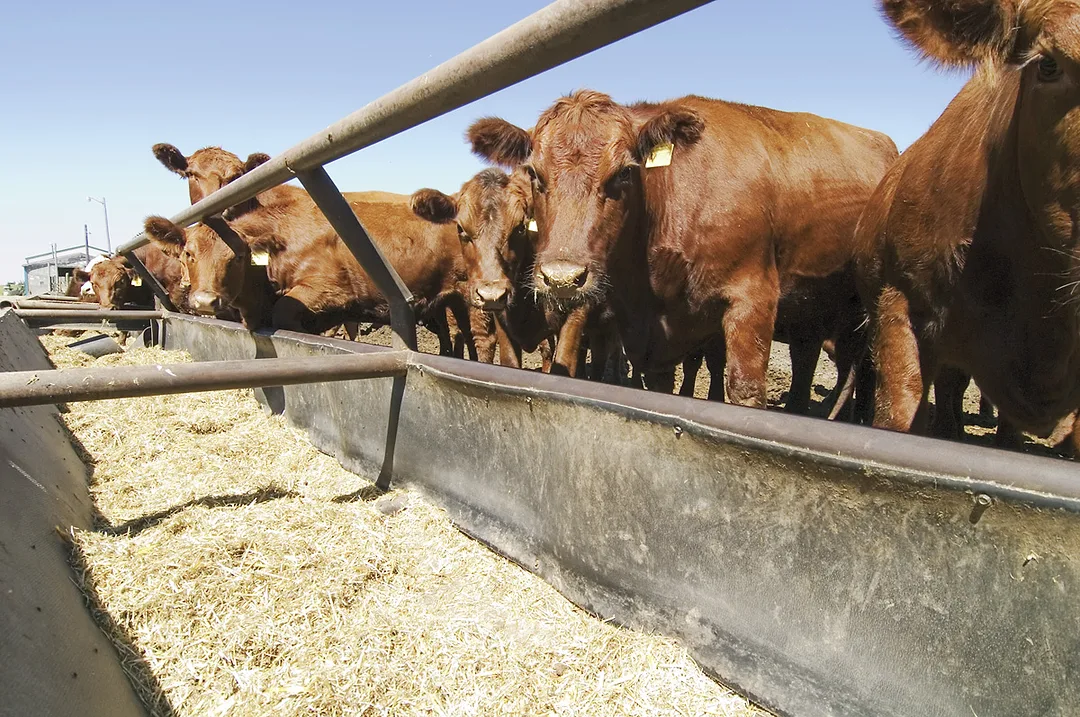
Access to water is equally important. Overcrowding at water sources creates competition, and subordinate animals – often younger, smaller or lower-ranking in the herd – frequently lose out. As a general rule, providing at least 1 linear foot of trough space per 10 animals helps ensure that all cattle can drink without undue competition. During periods of high heat, expanding that space further reduces stress and supports consistent intake across the entire herd. When animals are forced to compete for water, the weakest individuals suffer most, and that inequity shows up in performance data over time.
Trough maintenance is another area where attention to detail pays dividends. Algae growth, sediment buildup and manure contamination are among the most common deterrents to adequate water consumption. Cattle are sensitive to palatability, and even a mildly fouled trough can cause animals to reduce intake significantly. Cleaning and flushing troughs on a weekly basis maintains the freshness that encourages consistent drinking habits throughout the herd.
The physical placement of water sources across a grazing operation also deserves strategic consideration. Distributing water points throughout pastures encourages more uniform grazing patterns, prevents overuse of areas immediately surrounding a single source and reduces the energy cattle expend traveling to drink. In large-scale operations, achieving ideal placement is not always practical; however, producers should be aware that cattle will willingly travel 2 to 5 miles in search of water, and that long distances translate into burned energy and reduced performance. Wherever possible, minimizing the travel distance to a water source is a worthwhile investment.
Feed management
A well-balanced feeding program supports optimal growth rates and reproductive performance while keeping costs under control. Beef cattle diets are built on a foundation of forages – pasture, hay or silage – supplemented with energy and protein concentrates as the animal’s production stage demands. Getting that balance right requires consistent monitoring, accurate data and a willingness to adjust as conditions change.
Body condition scoring, commonly referred to as BCS, is one of the most practical tools available to cattle producers. Regularly assessing the body condition of animals on a 9-point scale and targeting a score of 5 to 6 gives producers a reliable, visual method for determining whether nutritional adjustments are needed. Animals that fall below that range may be underfed, experiencing health challenges or entering a demanding production phase that requires greater nutritional support. Those scoring above the target range may be receiving more energy than necessary, which represents both a cost inefficiency and a potential reproductive concern in breeding females.
Nutritional needs are not static; they shift meaningfully across different stages of production. During dry or maintenance periods, energy and protein requirements are relatively modest. As animals move into breeding, late gestation and early lactation, demands increase substantially, and rations must be adjusted accordingly. Stage-based feeding is not simply good practice, it is essential for supporting reproductive success, calf health and the long-term productivity of the cow herd.
One of the most common (and costly) mistakes in feed management is relying on visual assessment of hay and silage rather than actual laboratory analysis. Forage quality varies widely based on cutting date, weather conditions during harvest and storage methods. Testing hay and silage for dry matter, crude protein (CP) and energy content before formulating rations removes the guesswork and allows producers to build diets based on what the feed actually contains, not what they assume it contains. Under- or overfeeding is the predictable result of skipping this step.
Feed waste is another area with significant financial implications. Without appropriate hay rings and properly sized feedbunks, spoilage and trampling can account for 10% to 30% of total feed costs. This is a substantial loss that can be dramatically reduced through relatively modest equipment investments.
Year-round mineral and vitamin supplementation rounds out a complete feeding program. Phosphorus, selenium and vitamins A, D and E are commonly deficient in forage-based diets and must be provided through targeted supplementation. Producers also should consider science-based, research-proven products that positively influence feed digestion and immune function, as these can provide meaningful returns on investment through improved efficiency and health outcomes.
Integrating disciplined water and feed management into daily operations is essential for sustainable beef production. Producers who monitor intake, test quality and adjust rations based on actual animal needs will see measurable improvements in herd health, feed conversion efficiency and long-term profitability. These are not complicated concepts, but they require consistent execution. That consistency is what separates exceptional operations from average ones.