We use cookies to provide you with a better experience. By continuing to browse the site you are agreeing to our use of cookies in accordance with our Cookie Policy.
  • Sign In
  • Create Account
  • Sign Out
  • My Account
subscribe / renew
  • Topics
    • All recent articles
    • Forage Analysis
      • Testing Forages
    • Forage Equipment
      • Baling Equipment
      • Forage Technology
      • Groundwork Equipment
      • Silage Equipment
      • Storage Equipment
    • Forage Harvest
      • Harvest Considerations
      • Harvest Issues
    • Forage Marketing
      • Pricing Forages
      • Selling Forages
    • Forage Planting
      • Crop Rotation
      • Seeds
    • Forage Production
      • Common Issues
      • Growing Issues
      • Irrigation
      • Pests & Weeds
      • Plant Health
      • Soil Health
      • Soil Sampling
      • Weather
    • Forage Selection
      • Alternative Forages
      • Commodity Crops
      • Ensiled Forages
      • Grasses & Legumes
      • Hay
      • Small Grains
    • Forage Storage
      • Baling
      • Ensiling
      • Transportation
      • Wrapping
    • Forage Business Management
    • Forage Farm Features
  • News
    • Forage Industry Issues
  • Blogs
    • From the Editor
    • Guest Blogs
    • Irons in the Fire
    • Outside Eden
    • Tales of a Hay Hauler
  • Buyers Guide
  • Current Issue
  • Past Issues
  • Advertise
  • Ask AgProud

Progressive Dairy

Progressive Dairy Canada

PD Canada en Francais

Progressive Cattle

Progressive Cattle Canada

Progressive Forage

Agproud Idaho

Home

Home » Topics » Progressive Forage » Forage Production

Forage Production
Forage Production RSS Feed RSS

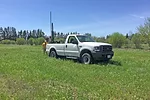
62407-cardoso-truck.jpg

Benefits of including perennial forages into semiarid cropping systems

Farming in semiarid regions means working with limited water and challenging soil conditions. Perennial forages offer a practical fix: Their deep roots improve soil structure, reduce compaction and help leach salts from the root zone. For producers committed to stewardship, perennials are more than cover – they’re a strategy for resilience.
November 18, 2025
Abmael Cardoso, Jose Franco, and Marta Kohmann

Perennial forages improve soil structure, reduce compaction and help leach salts from the root zone. For producers committed to stewardship, perennials are more than cover – they’re a strategy for resilience.


Read More
62398-jensen-image-1.jpg

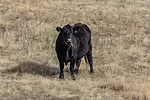
Plan now for improving grazing management in the coming year

Grazing distribution is shaped by a mix of uncontrollable factors – such as weather and terrain – and those we can influence, such as livestock genetics and vegetation. Recent research highlights how genetic efficiency plays a key role in where and how cattle graze.
November 13, 2025
K. Scott Jensen

Grazing distribution isn’t just about weather and terrain – it’s also about the cattle and vegetation.


Read More
62404-loomis-field.jpg

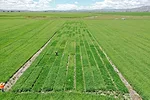
A new perspective from above: Using drones to advance crop production and agricultural extension

Using drones in extension programming has transformed how we observe and manage crop production. Aerial imagery offers producers and consultants a clearer, more comprehensive view of field conditions, leading to smarter, data-driven decisions.
November 12, 2025
Grant Loomis

From boots on the ground to drones in the sky, extension education is entering a new era.


Read More
62258-fleming-manure-spread-1.jpg

Paying attention to manure

Even in uncertain times, one thing holds true: Informed farmers make better decisions. Manure analysis is a smart way to track fertilizer value, but it all starts with proper sampling.
October 15, 2025
Scott Fleming and Dustin Sawyer

As the crop year winds down and uncertainty looms for 2026, one thing remains clear: Informed farmers make better decisions.


Read More
62287-kern-lunbery-winter-grazing-dry-year.jpg

Winter grazing considerations

Winter grazing decreases feed costs by allowing livestock to harvest their own forage, but nutritional balance is key. Animals need more than dormant grass – diverse pastures with legumes, forbs and grasses support body condition, reproduction and overall performance.
October 13, 2025
Rebecca Kern-Lunbery

Winter grazing isn’t just a cost-saver – it’s a smart strategy for livestock health and performance.


Read More
62087-thomas-pasture.jpg

Fescue toxicosis: Ways to minimize toxic effects

Tall fescue is prized for its hardiness – thriving in poor soils, resisting pests and enduring harsh climates. But beneath that resilience lies a hidden threat: a fungal endophyte that strengthens the plant while compromising cattle health.
September 15, 2025
Heather Smith Thomas

Fescue toxicosis is commonly seen in cattle grazing endophyte-infected tall fescue. Despite the risk, tall fescue remains widely used across many regions because of its ease of establishment and long-term persistence.


Read More
62086-kern-lunbery-1116.jpg

Forage for camelids

Llamas and alpacas may graze like cattle, but their nutritional needs tell a different story. With limited gut capacity and constant dry matter intake, these fiber-producing camelids rely on nutrient-dense forage to meet their protein, energy and micronutrient needs.
September 9, 2025
Rebecca Kern-Lunbery

Llamas and alpacas may graze like cattle, but their nutritional needs tell a different story. With limited gut capacity and constant dry matter intake, these fiber-producing camelids rely on nutrient-dense forage to meet their protein, energy and micronutrient needs.


Read More
62119-viney-Micronutrient.jpg

Fall application of boron can help maximize alfalfa yields

Crinkled leaves and discolored tops signal boron is missing and forage quality is decreasing. Boosting leaf growth with this micronutrient can mean higher feed value and healthier roots.
September 5, 2025
Marian Viney

Crinkled leaves and discolored tops signal boron is missing and forage quality is decreasing. Boosting leaf growth with this micronutrient can mean higher feed value and healthier roots.


Read More

No snow, no flow: No grow?

Groundwater decline and alfalfa production in the Colorado River Basin
August 21, 2025
Melissa A. Bravo

Across the Colorado River Basin, producers face pressure of an ever-dwindling aquifer and deep-rooted decisions as the 2026 river rules are due to expire.


Read More
61947-acharya-2371.jpg

Soil health considerations after harvesting summer silage crops

While summer silage crops fuel livestock productivity, their intensive management can quietly erode soil health. Here’s how producers can preserve long-term soil function without sacrificing yield.
August 8, 2025
Pramod Acharya

Silage yields are soaring, but what is happening to the soil left behind?


Read More
Previous 1 2 3 4 5 6 7 8 9 … 67 68 Next
  • Progressive Forage
  • 0626pf-digital-edition-feature-spot.jpg

    June 1, 2026 Progressive Forage digital magazine

    June 1, 2026
  • 63411-raver-dixon.jpg

    Does forage quality have an equation?

    May 31, 2026
    • Irons in the Fire: It has a different ring to it

      May 29, 2026

FREE NEWSLETTERS

Award-winning coverage of in-depth news and analysis to make your business more profitable.

SIGNUP TODAY
Advertisement
THE GUIDE

How do I get my company listed in your Buyers Guide? 
Submit a request to be listed for FREE in the Buyers Guide here. 

Why can I only see so many articles before I have to register for the site?
Find out why here.

How do I submit an idea for an article? 
Click here.

  • INDUSTRY NEWS
  • Forage Industry News

    Rock River Laboratory introduces family of brands

    May 15, 2026
  • Forage Industry News

    Breeding the future of alfalfa: Driving innovation amid industry consolidation

    November 28, 2025
  • Forage Industry News

    Producer-led Watershed Program causes ripple effect

    October 9, 2025
Advertisement

I'm looking for ________

Find the right products and services for your farm, ranch or operation.

CHECK OUT OUR BUYERS GUIDE
Advertisement
  • FEATURED PODCASTS
  • [Podcast] Being proactive about mental health with Jason Medows

    Progressive Forage
    Progressive Cattle
PERSONALIZED CONTENT
Create an account and see website content tailored to your operation.  It only takes a few seconds!
SEE RECOMMENDATIONS NOW!
Copyright © 2026 Progressive Publishing

MORE INFORMATION
  • About Us
  • Terms & Conditions
  • Privacy Policy
  • FAQs
  • Advertise
  • Shop
  • Stats Posters

OUR MAGAZINES
  • Progressive Dairy
    • Facebook
    • Twitter
    • Linkedin
  • Progressive Dairy — Canada
    • Facebook
    • Twitter
    • Linkedin
  • Progressive Dairy — en français
    • Facebook
  • Progressive Cattle
    • Facebook
    • Twitter
    • Linkedin
  • Progressive Cattle — Canada
    • Facebook
    • Linkedin
  • Progressive Forage
    • Facebook
    • Twitter
  • AgProud — Idaho
    • Facebook
    • Linkedin

CONTACT INFORMATION

Progressive Publishing
238 West Nez Perce (physical)
PO Box 585 (mailing)
Jerome, ID 83338


info@progressivepublish.com
(800) 320-1424
(208) 324-7513 (Main)
(208) 324-1133 (Fax)