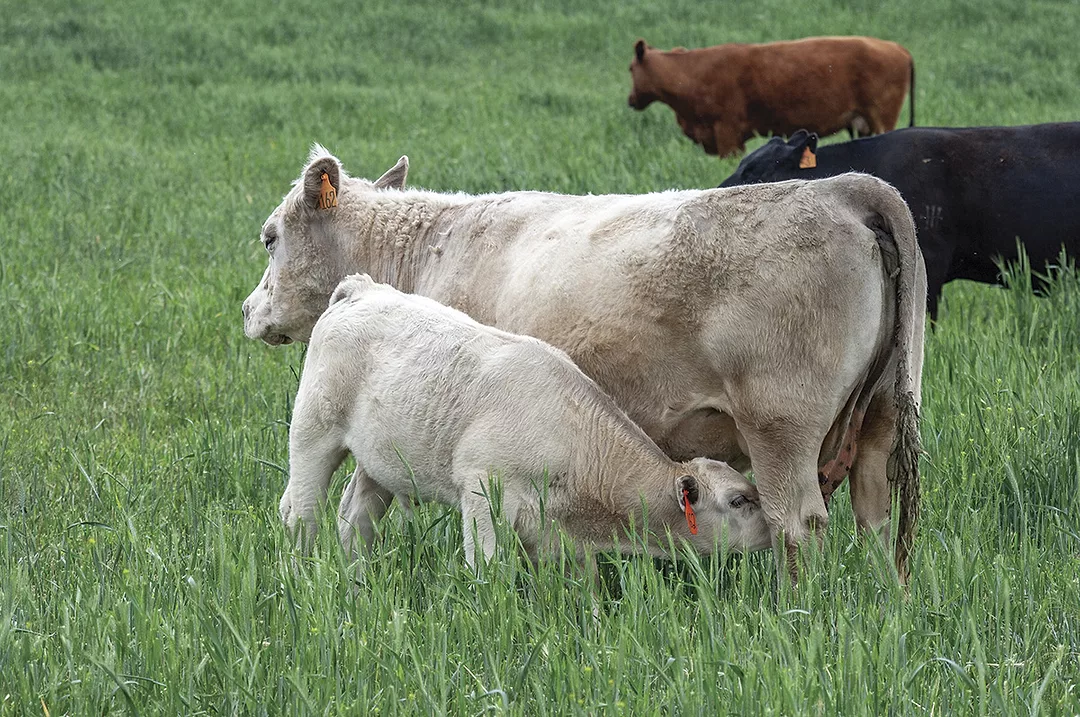
We see a lot of variation in cattle, even when we utilize full siblings within sire groups. We can have flushmates that are the same, turn them all out, yet our calf crop still is different. We wonder why there is so much variation from the lightest calf to the heaviest calf, and from the highest-quality grade to the lowest-quality grade, and from the calf that stays in the herd until she is 14 to 17 years old versus the one that falls out at 2 years old. How can we have so much biological variation in cattle?

I think it’s best understood by looking at ourselves as humans and understanding that we have 23 pairs (46 total) of chromosomes as humans. As humans, we can look at our brothers and our sisters and see the variation in our siblings. For example, I’m 6 feet tall and my sister is 5 feet, 1 inch. When we look at the variation in siblings and understand that cattle have 30 pairs of chromosomes, and due to the recombination of genes during reproduction and the genetic diversity present within breeds, we realize it’s not unusual to see significant variation among even closely related animals.
With so much variation in the calf crop, we can use genomics to help make the best selection decisions for our herd. As we look at using genomics technology, here are some key thoughts as to the benefits it adds not only to our individual operations, but also to the industry as a whole.
Progressing favorable genetics
Genomics allows us to be able to find the outliers that are going to move our programs forward, as well as to find the outliers that are going to hold us back in making progress in traits of importance. In essence, by identifying the poor performers at an early age, cattle operations are going to be able to make faster genetic progress and be more profitable.
Selecting from a multitude of traits
Depending on the genomic testing solution you select, you can receive different tools to utilize the product. One of my favorite tools available is the option for custom indexes, in which you can select from multiple traits at a time, even putting negative weights on some traits and positive weights on others. This allows you to put up the guardrails and find cattle optimal for your environment, therefore producing the highest-quality, most profitable cow for your operation by selecting for an increase in traits that need improved (such as stayability, marbling or tenderness) or a decrease in traits that you wish to hold constant or decrease (such as milk or yearling weight in limited feed resource environments).
Decreasing the risk and retaining the best
With high inputs and the ability to sell calves in a strong market, genomics is our tool to be able to keep back the very best replacement heifers. With today’s cattle prices, we need only keep the very best ones to improve our herd. Others can go on the truck, as they are worth more in the feeder calf pen.
Receiving twice the benefit
By investing in genetics, you can identify the very best females to keep for your operation, and you have a valuable tool allowing you to not only select the very best for the traits you desire and keep those females but also to market open heifers, bred heifers and feeder calves on their maternal and terminal values.
Building back a quality cow herd
Quality genetics will remain key as we work to build back the cow herd. By investing in high-quality genetics, producers can have higher profit margins moving forward, as they will select for better genetics while rebuilding and be able to capitalize on those quality genetics through offering lower-risk cattle to buyers. Instead of buying unknown genetics from the stockyard, the buyer can now have information regarding the maternal and terminal values of cattle before they clean off the first calf or hang the first carcass. When purchasing unknown cattle at a stockyard, the inherent risk is high, as the big pretty heifers might not have a lot of growth or marbling in them. They may be big and pretty, but they also might not have any carcass traits, or they might be high-terminal cattle with no stayability. Genomic testing helps remove this risk. This also benefits the seller, as they do not get paid an average price for these animals; they can get paid an above-average price because the females are proven to be above-average females.
The other half of the equation
Using genomically enhanced expected progeny differences (EPDs) for both bulls and females accelerates the genetic progress more effectively than relying only on one side of the mating. By using genomic insights, we ensure that we are not simply selecting bulls and heifers on a whim – because without this data, we would not know whether they are big productive cows that stay in the herd and produce pounds of calf, or if they are the big cows that eat a lot of feed and don’t produce any pounds. These are the important questions we can answer with genomics in order to move operations forward.
From the seedstock to the feedlot phase, genomic data guides us to make more confident decisions on our cattle operations. As my colleagues have heard me say, and it is something I stand behind: You can’t manage what you can’t measure.