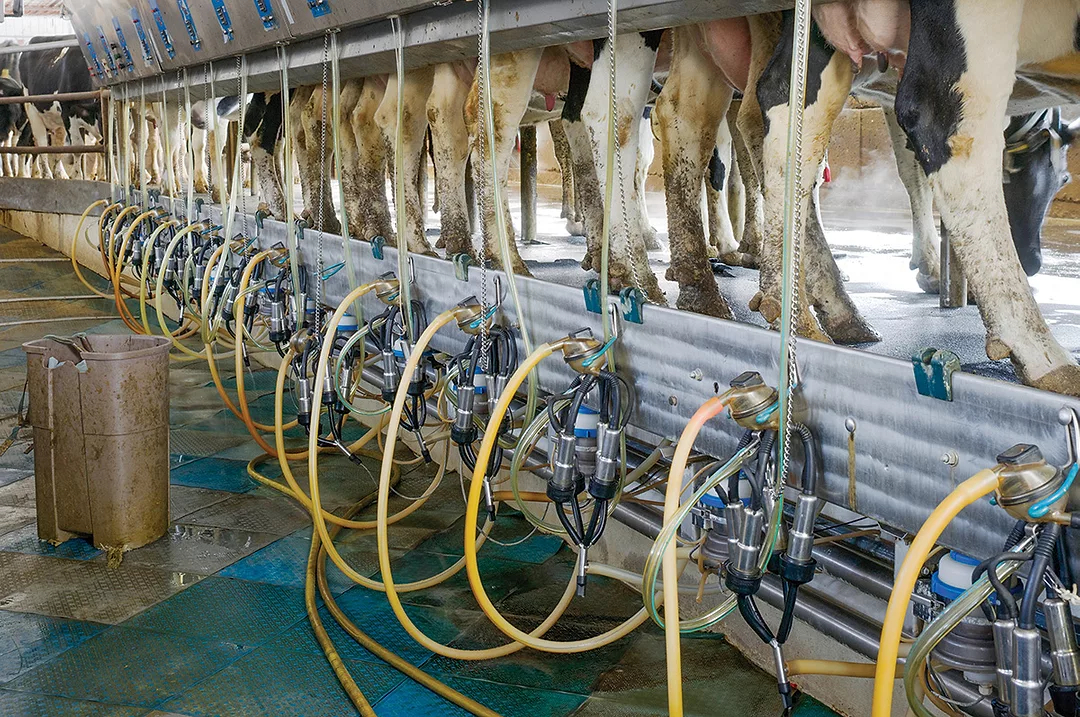
With the average U.S. dairy herd sizes more than doubling in the last two decades, producers nationwide face a critical question: When does herd growth demand parlor expansion? The answer isn't just about cow count; it is about optimizing efficiency, animal welfare and long-term profitability.

Recognizing the expansion tipping point
The most telling indicator isn't herd size alone, but time management. When cows spend more than three-and-a-half hours daily away from their pens for milking, producers see measurable impacts on animal welfare and production. Research shows that each hour of additional rest beyond seven hours can generate an extra 3.7 pounds of milk per cow per day – a significant return that makes expansion planning crucial.
If your parlor is running 20-plus hours daily, you've already passed the efficiency threshold. Beyond this point, rushed milking routines, overcrowded holding areas and stressed animals create a cascade of problems: reduced milk letdown, increased mastitis risk and declining overall herd health.
The hidden costs of delayed expansion
Wisconsin herds exemplify this growth challenge, jumping from an average of 140 to 208 cows in just five years. For many of these operations, the original parlor infrastructure simply wasn't designed for such rapid expansion. The result? Bottlenecks that cost producers both immediate production and long-term sustainability.
Overcrowded holding areas – those providing less than the recommended 15 to 20 square feet per cow – elevate cortisol levels and reduce oxytocin, directly impairing milk letdown. Meanwhile, extended standing times on hard surfaces increase lameness, further reducing productivity. First-lactation heifers suffer most, potentially losing up to 2 pounds of daily production when competing with mature cows in cramped conditions.
Smart expansion strategies
Modern expansion isn't about complete facility overhauls. Today's modular approaches allow producers to scale systematically, matching infrastructure investment to growth needs. The key is designing for 20% to 30% capacity increases while maintaining flexibility for future growth.
The best way to evaluate your expansion capabilities is to work with experts. Talk to your dealer, equipment manufacturers and other dairies that have done expansions. Learn from both the successes and failures of others.
Successful expansion begins with four critical evaluations:
- Physical infrastructure capacity
- Operational workflow efficiency
- Regulatory compliance requirements
- Financial sustainability
The most cost-effective approach often involves upgrading core systems like vacuum, water, cooling and waste management first. Done as part of initial planning, these components are far less expensive than retrofitting them later when adding stalls.
Group size optimization
The sweet spot for group sizes varies by operation scale. Herds under 1,250 cows typically optimize with groups of 60 to 150 animals, while larger operations benefit from 150- to 250-cow groups. These sizes align with standard parlor capacities – for instance, groups of 120 to 150 cows work efficiently with double-12 or double-16 parlors, optimizing throughput while maintaining individual animal attention.
My team and I recommend strategic grouping: Separating first-lactation heifers from mature cows alone can increase production by up to 2 pounds per day, while closely monitoring fresh cows in small groups during their critical first 21 days post-calving supports better recovery and long-term performance.
Future-proofing your investment
The expansion philosophy of "build for where you want to be" requires balancing scalability with financial prudence. Successful producers focus on infrastructure that supports cow comfort – proper ventilation, non-slip surfaces and logical cow flow patterns – while avoiding overinvestment in unused capacity.
The goal isn't just accommodating more cows; it is creating systems that enhance efficiency, reduce labor strain and improve animal welfare. With farms over 2,500 cows increasing 17% in recent years, the producers who plan strategically today position themselves for sustainable growth in tomorrow's evolving dairy landscape.
Thoughtful expansion planning ensures that growing herds translate to increasing profits, not just growing challenges.