As the industry works to build back the cow herd after reaching historic low numbers, quality genetics will remain key to continue progressing herds, and the industry, forward.

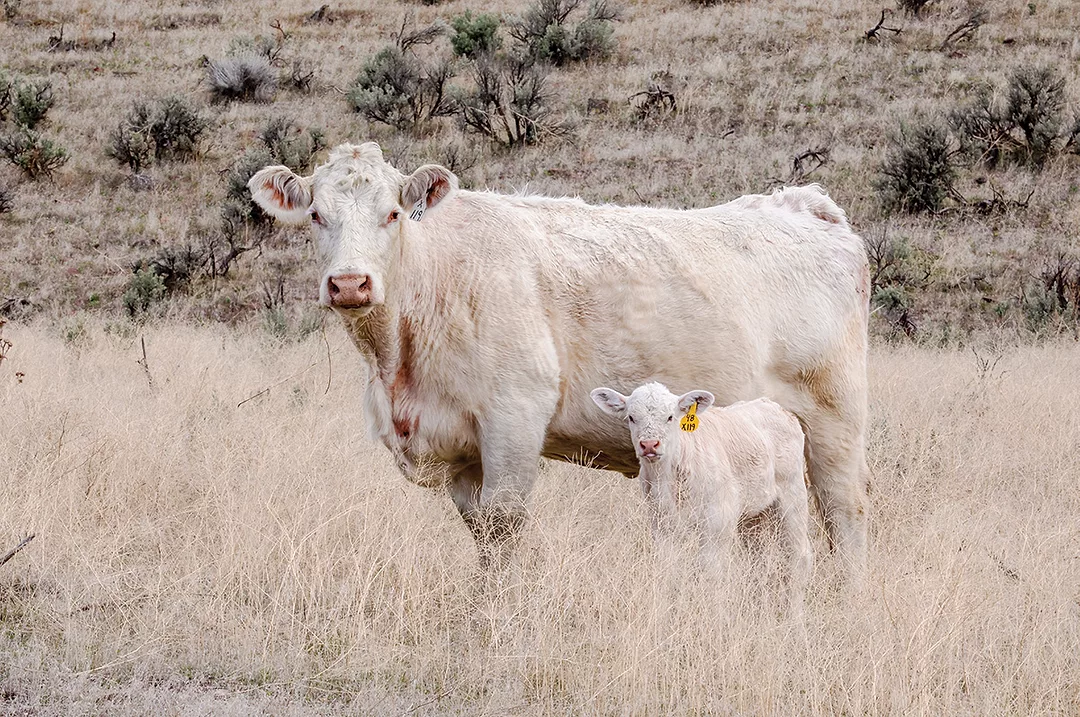
Paul Mathews, general manager of Cannon Ranch in Nevada, shared they run around 2,000 Hereford-Angus mother cows on 480,000 acres of Bureau of Land Management (BLM) land. With three cow herds, they manage a registered Angus herd and a purebred herd of non-registered Angus, which are bred to Hereford bulls to create F1 females. With a focus on heifer development, raising commercial cattle and managing a feedlot, the operation implemented genomic testing in 2021.
“We were selecting visually and, over the years, we figured out our visual selection leaned heavier toward terminal traits and good-looking heifers,” Mathews says. “We had a 12 percent open rate and got into genetic testing. Our thought in doing this is, ‘We can move our calf herd quality forward, faster.’”
Mathews says they tested only the heifers selected at the beginning of their genomic testing journey, but over the past two years, they have started testing 100% of their heifer crop so they can have a DNA profile to reference during the selection process.
“I talk to other ranchers who think I’m crazy for spending the amount of money we spend on this, but I try to convince them I started half-in, half-out on this, but not for the future,” he says. “We’re all in because we are building the DNA profile.”
For Cannon Ranch’s program, they are testing all heifers across their purebred and commercial herds so they can tighten up those herds even more in the future by looking at the low producers, weaning weights and other key traits. Heifer ID tags are numbered based on the rank of their maternal index score. It’s all about referencing back – and it’s working. By placing focus on maternal traits to boost pregnancy rates and stayability, using their Cannon Maternal custom index, their operation now has a 94% breed-up rate. They retain the top 50% of heifers.
“It’s expensive to develop replacement heifers, and they’re worth a lot of money when they are right, uniform and correct,” Mathews says. “Our goal is to take out the inefficiencies. If we get the DNA data and stayability is not good, the RFI feed conversion is not good, and we see that the heifer pregnancy rate is not as efficient as others, I want to get them out of the way upfront, so then I have a valuable feeder heifer and not an open 2- or 3-year-old cow.”
Investing in better genetics
“By investing in high-quality genetics, producers can have higher profit margins moving forward, as they will select for better genetics while rebuilding and be able to capitalize on those quality genetics through offering lower-risk cattle to buyers,” shares Paige Pratt, beef genomics specialist with Neogen.
Producers can also use data as a form of risk management for their operations. Instead of purchasing unknown genetics from the sale barn, producers are able to glean a clear genetic outlook of the animals’ maternal and terminal values earlier in life.
“When purchasing unknown cattle at a stockyard, the inherent risk is high, as the big, pretty heifers might not have any carcass traits, or they might be terminal cattle with no stayability,” says Pratt. “Genomic testing helps remove this risk. This also benefits the seller, as they can get paid an above-average price because the females are proven to be above-average females.”
On that topic, Mathews shares his thoughts:
“In my experience, people are willing to pay for quality,” he says. “As I continue to build this cow herd, I put the best quality I can into the selection process to develop mama cows and develop a good product with the steers. It reflects in the markets and in the reputation of the ranch.”
Progressing individual herds and the industry forward
As the industry looks toward building herd numbers, it’s important to understand how genomics implementation can be a helping hand in progressing the best genetics forward. Pratt outlines five benefits made possible through genomic technology:
- Clear direction to navigate biological variation: “We see a lot of variation in cattle, even when we utilize full sib sire groups,” says Pratt. Cattle have 30 pairs of chromosomes, and due to the recombination of genes during reproduction and the genetic diversity present within breeds, significant variation is likely even among closely related animals.
- Retaining the best replacements: With today’s strong cattle prices, using genomic technology helps producers retain the best replacements and market the rest. “Genomics is our tool to be able to keep back the very best replacement heifers to improve our herd,” Pratt sys. “Producers have a valuable tool allowing you to not only select the best for the traits you desire and keep those females, but also market open heifers, bred heifers and feeder calves on their maternal and terminal values.”
- Progressing favorable genetics: “Genomics allows us to be able to find the outliers that are going to move our programs forward, as well as find the animals that are going to hold us back from making progress in traits of importance,” Pratt says.
- Custom multitrait indexes: One of Pratt’s favorite tools is the ability to build custom indexes. This means, “You can select from multiple traits at one time, even putting negative weights on some traits and positive weights on others. This allows you to put up the guardrails and find cattle that are optimal for your environment, therefore producing the highest-quality, most profitable cow for your operation.”
- Genomically enhanced expected progeny differences (GE-EPDs): Rather than relying only on one side of the mating, producers can help accelerate the genetic progress for both bulls and females more effectively. “By using genomic insights, we are able to ensure that we are not just simply selecting bulls and heifers on a whim,” Pratt says, “because without this data, we would not know whether they are big, productive cows that stay in the herd and produce pounds of calf, or if they are the big cows that eat a lot of feed and don’t produce a high percentage of their bodyweight in pounds of calf weaned.”
For Mathews – who spent years leasing the land now known as Cannon Ranch with his dad and brother before returning as general manager in 2016 – genetics has always been a top priority.
“We have always focused on good genetics,” he says. “We want to do the best we can, and this is a tool that helps us do that.”
In building back the herd, keep these perspectives shared from Mathews and Pratt in mind.
Reprinted with permission from Neogen.