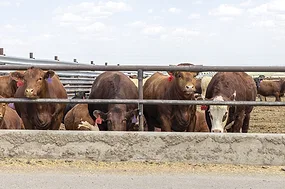
Grass tetany is a condition in cows caused by low magnesium levels in the blood and can lead to death. These low levels occur when magnesium absorption by the animal is less than the magnesium needed for daily function, tissue growth and milk production.

Some early signs of grass tetany include muscle twitching around the face and ears, coordination problems and cows walking with a stiff gait. Cows at this stage may also act nervously or aggressively. As grass tetany progresses, convulsions and seizures may occur. Cows with severe grass tetany are often found lying on their side with their head and neck tilted up. Death can occur within four to eight hours of the initial symptoms.
Dietary magnesium requirements are about 7 to 9 grams per day for nonlactating cows and 18 to 21 grams per day for lactating cows. Cows nursing calves less than 4 months old are at higher risk for grass tetany. Magnesium absorption is reduced as animals age, so older cows are also at higher risk. The chance of grass tetany is low in cows nursing older calves or nonlactating pregnant cows. Grass tetany is extremely unlikely in growing animals because of their lower magnesium requirements and increased absorption of magnesium.
Grass tetany is more common in lactating cows grazing cool-season annual forages. This is likely due to several factors, including increased milk production, high levels of potassium and nitrogen in the forage, as well as lower levels of magnesium and sodium in the forage. Magnesium uptake by plants is likely reduced when temperatures are colder.
Mineral supplements designed to provide additional magnesium should be considered to help prevent grass tetany in cows grazing cool-season annual forages. Mineral supplements with a target intake of 4 ounces per day should contain at least 5% magnesium and 14% calcium. Calcium is important because lactating cows grazing cool-season forages can experience both grass tetany and milk fever at the same time. Monitor mineral intake, as higher levels of magnesium often reduce mineral intake, and consistent intake of the mineral supplement is critical.
Cows showing signs of grass tetany are generally treated by a veterinarian with intravenous solutions of magnesium. If a veterinarian is not available, magnesium can be effectively administered through a rectal enema. Magnesium sulfate heptahydrate (Epsom salts) has been used in enemas; 200 grams of Epsom salt mixed with water will provide about 19.6 grams of magnesium.