We’ve made it through a tough winter, and calving season is winding down. If you’re like me, you’ve been looking forward to spring. It’s almost time to turn cows out on lush, green pastures as we start pondering the mating decisions for the breeding season. But as you know, our herd is entering the most critical nutritional point of the production cycle. We ask our cows to have a calf on their own, repair their uterus, lactate, raise a heavy calf and breed back on time. Reproductive success takes a lot of nutrient resources! Extraordinary cows require exceptional nutrition, and you’d never put cheap gas in a genetic Ferrari. Despite all the physiological challenges, with the right proactive approach and nutritional program, we can do it!

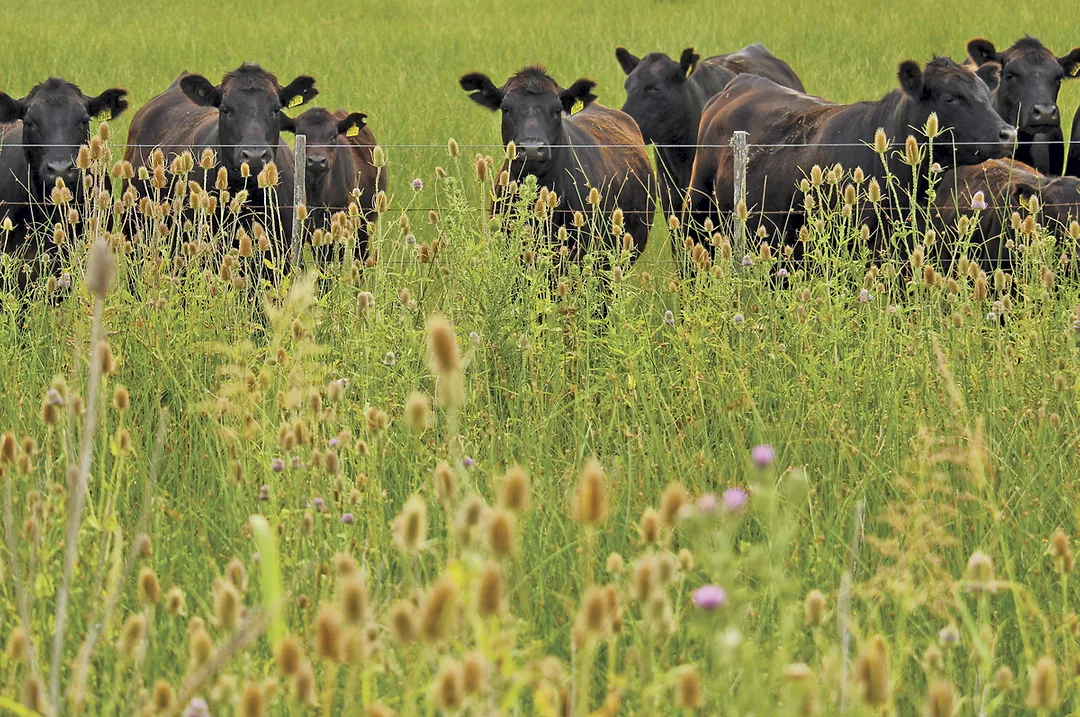
If anyone mentions spring grazing issues, the first thing that comes to mind is grass tetany. Grass tetany is a metabolic issue caused by low magnesium levels in the blood. Believe it or not, the magnesium levels in grass don’t fluctuate much throughout the year, but tetany is caused by high levels of potassium in lush, rapidly growing forages. Potassium interferes with magnesium absorption, leading to a drop in blood magnesium, causing clinical symptoms. Nitrogen can interfere with magnesium absorption, too, so if you’ve fertilized your pastures, just be aware of the potential risks of grass tetany. There are high-mag mineral supplements available that can effectively prevent any issues, but keep in mind that they taste bitter and are not as palatable to cows. Keep an eye on mineral consumption because if they don’t eat the high-mag mineral, they may not be getting the other trace minerals you need to maximize reproductive success.
We are providing a service to our herd by allowing access to lush pastures with elevated protein and vitamin levels, right? Keep in mind, some of these extremely lush, rapidly growing forages can be washy and low in dry matter (DM) content. A 1,300-pound cow needs to consume roughly 26 pounds of dry matter daily. Her rumen is full somewhere between 100 and 125 pounds, so if the dry matter content of the forage dips below 25%, we run the risk of her not being physically capable of consuming enough forage to meet her energy needs. If your cows were well adapted to a winter-feeding regime and then turned out on a washy pasture, they may fall into a negative energy balance. Going from a positive to a negative energy balance, along with grazing a pasture that’s high in soluble protein during the breeding season, is a frequent reason cows slip past the first service and extend next year’s calving interval.
If you’re fortunate enough to still have carryover hay, provide some dry hay to increase the dietary DM intake. This will also dilute the total potassium consumed and help with grass tetany issues. Don’t skimp on a vitamin and mineral supplement, and make sure it contains a daily prebiotic. Prebiotics can stimulate the microbiome to enhance nutrient utilization during this nutritionally critical time. Just a 16% improvement in volatile fatty acid (VFA) production is energetically equivalent to feeding a pound of corn. Getting more out of the forage your cow consumes can easily be the difference between a body condition score (BCS) of 4 and 5, and we all know the reproductive benefits we get by keeping our cows and heifers in good condition.
Don’t forget that 70% of the immune system is in the gut, too. The added health benefits of a prebiotic can profitably complement your vaccination program. Proper health and quality nutrition during the breeding season are the differences in producing healthy, efficient pounds in your weaned calf crop next year.
Don’t forget the bull
I’ve focused a lot of attention on the cows, but we all know “it takes two to tango.” Your herd bull is the star athlete of your program, and he represents half of the genetics in next year’s calves. His nutrition and health are paramount to achieving the reproductive success you’re after. If you purchased a bull like I did, slowly adapt him from his presale high-energy diet to a more forage-based program. If possible, give yourself at least 60 days to nutritionally prepare your herd sire for the breeding season – because that’s the length of the spermatogenesis cycle. Feed a mineral that has organic sources of copper, manganese and especially zinc. High levels of readily absorbed zinc are linked to improved sperm morphology, good hoof health and improved immune function. Delivering a prebiotic in a highly fortified vitamin and mineral supplement, you can assure that the star athlete of the herd can effectively cover females.
We ask a lot of our herd to breed back in time when nutritional requirements are highest. You may think you’re doing a service to your cows by turning them out on lush pastures, but never assume that the green grass is also nutrient-dense. Getting cows and heifers bred on time is our goal. It can be challenging, but we can do it! Keep a steady or increasing plane of nutrition, don’t cut corners, and use the technologies available. If you keep these guidelines in mind, expect better breedup, tighter calving windows and greater first-service conception rates.