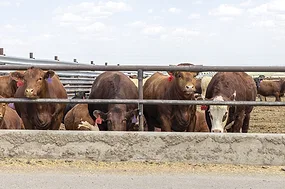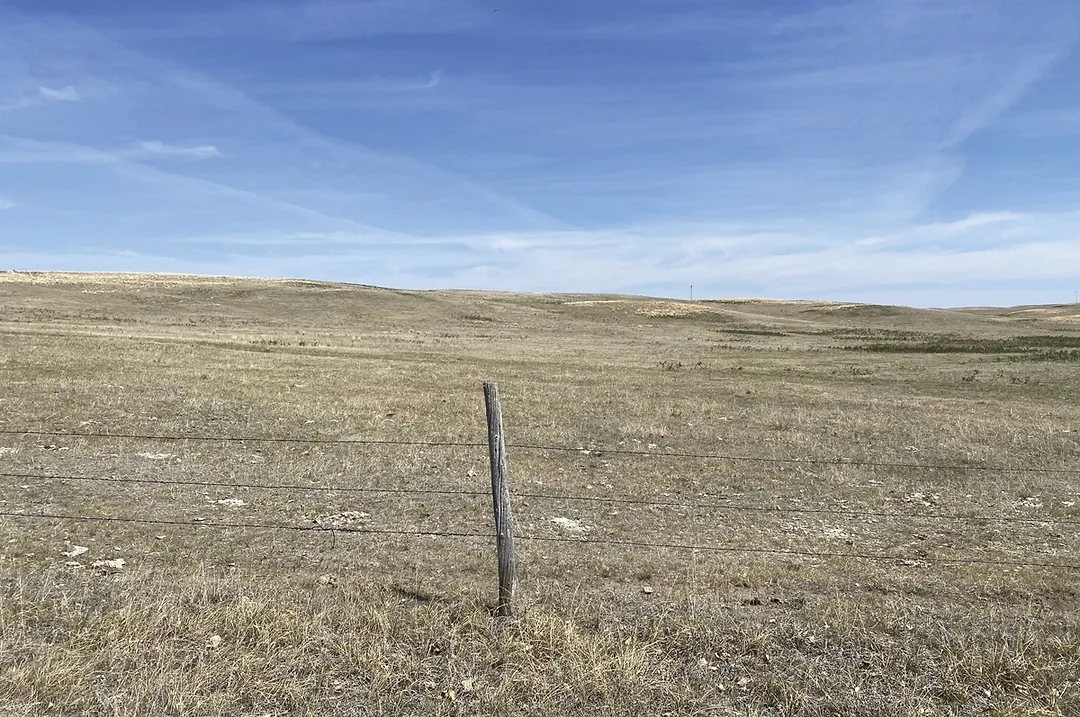
Drought conditions have been widespread in the U.S. this year, creating challenges for ranchers. Grazing management decisions directly influence the ability of rangelands and pastures to recover from drought and can increase a ranch's drought resilience.


Fall grazing considerations
Fall grazing will be driven by late-season precipitation and species composition of rangelands and pastures. If the pasture is comprised of tame grass species such as bromegrass or Kentucky bluegrass, there should be no long-term negative impacts associated with grazing this fall, as long as they don’t overgraze.
Late-season precipitation will create the opportunity for regrowth of native grasses that were grazed before reaching the reproductive stage. If grazing native range this fall, be careful to monitor utilization and not overgraze to protect tiller development of cool-season grasses. As a general rule of thumb, grasses should not be grazed below the second node or the area between the first and second leaves.
These tillers will be used by these plants to initiate growth next spring. Fall droughts either don’t allow buds to come out of dormancy, thus no new tiller growth, or cause death to those tillers that did grow. If the tiller is lost due to drought stress or grazing, the plant will need to develop a new tiller in the spring, delaying grass growth and development. Additionally, North Dakota State University (NDSU) Extension has found that heavy grazing use (greater than 80% use) in the fall can reduce forage production of cool-season-dominated rangeland and pasture by over 50% the following grazing season.
It is recommended ranchers avoid grazing pastures that received heavy use this grazing season to allow them to recover. The stress of drought, in combination with overuse, can have long-term impacts on rangeland. Overgrazing affects the entire rangeland plant community, leading to a loss of plant species diversity and biomass, soil erosion and weed growth, and a reduction in the soil’s ability to hold water – ultimately decreasing forage production and animal performance.
Spring grazing following drought
As we look forward to the 2027 grazing season, pastures will require special care next spring to help them recover from the drought. Ranchers should be prepared for a delay in grass growth and development. NDSU Extension specialists have observed as much as a three-week delay in grazing readiness for introduced cool-season species and four weeks for native cool-season species following drought. If pastures are grazed too early, it reduces leaf area and the plants’ ability to capture sunlight. Grazing too early will reduce plant vigor, thin existing stands, lower total forage production and increase disease, insect and weed infestations.
Irrelevant of grass species, grazing before plants reach the appropriate stage of growth for grazing readiness causes a reduction in herbage production by as much as 60%. Grazing readiness for most domesticated pasture is at the three-leaf stage, whereas grazing readiness for most native range grasses is the three-and-a-half-leaf stage. Grazing too early ultimately results in a reduction in the recommended stocking rate and lower animal performance. Pastures and range damaged by grazing too early may take several years of deferment or even rest before the stand regains productivity.
Depending on your forage resources and growing-season conditions, it can be difficult to delay grazing until grasses reach grazing readiness. We recommend the following strategies, depending on available resources:
- Start by grazing annual forages and/or domestic cool-season pastures, which will reach grazing readiness earlier in the spring.
- Provide supplemental forage to livestock on domesticated pasture or hay land. However, be careful not to graze your hay lands too early, too short or when muddy, as stands will be dramatically reduced in forage production due to reduced vigor and plant damage, leading to new infestations of weeds.
- Continue dry lot feeding in May.
- If grazing cannot be delayed, minimize the impact to a small area of your pastures or in one of your cells. Then rest that cell or area the remainder of the grazing season and defer from grazing (no spring grazing) the next year.
While it may be tempting to start grazing early due to limited forage resources, it can have long-term impacts on forage production and plant health. Remember, it takes grass leaves to replenish the root food reserves needed to grow grass. Early-spring grazing, especially following a drought, can be costly in terms of total forage production during the entire grazing season.
Evaluating your grazing system
Unfortunately, there are many unknowns as we look toward the 2027 grazing season. Allowing pasture and rangeland to recover this fall or next spring will increase the ability of these grazing resources to recover from the drought. Now is the time to evaluate your grazing system to determine how you can increase management flexibility and resilience of your grazing resources and ranch.
To achieve optimal forage and livestock production, a grazing system should be planned around the available grazing resources. Many ranchers graze a combination of tame grass and native rangeland pastures. In this region, tame-grass pastures are typically comprised of cool-season species that exhibit rapid growth in the spring. A grazing system that includes both cool-season and warm-season plants has greater resilience. Having a diversity of cool- and warm-season grasses helps reduce susceptibility to drought, ensuring some level of forage growth regardless of the timing of precipitation. Diverse grasslands are also better able to meet the nutritional needs of grazing livestock, as grasses in the vegetative stage have higher protein and energy.
Integrating annual forages provides opportunities to extend the grazing system earlier in the spring and later in the fall. These additional forage options provide for greater flexibility in management, reducing the stress of early grazing and/or overutilization on pastures. Fall-seeded winter cereals, such as winter wheat, winter rye and triticale, allow ranchers to start grazing earlier in the growing season while avoiding the negative impacts of grazing pastures prior to grazing readiness.
A grazing system with multiple pastures also provides greater flexibility in moving cattle and creates resiliency of the entire unit through grazing recovery, intensity and distribution. During drought years, you can minimize overuse to one pasture versus the entire unit. A one-year overuse will not have long-term negative impacts and often promotes a positive response in increased plant diversity, as long as you provide sufficient recovery the next year.
Producers should have a grazing management plan in place that includes the possibility of drought continuing into the 2027 growing season. It is critical that every ranch has a grazing plan in place with well-defined triggers and actions for drought and other disturbances, so they can respond quickly and build the resilience of their ranch.