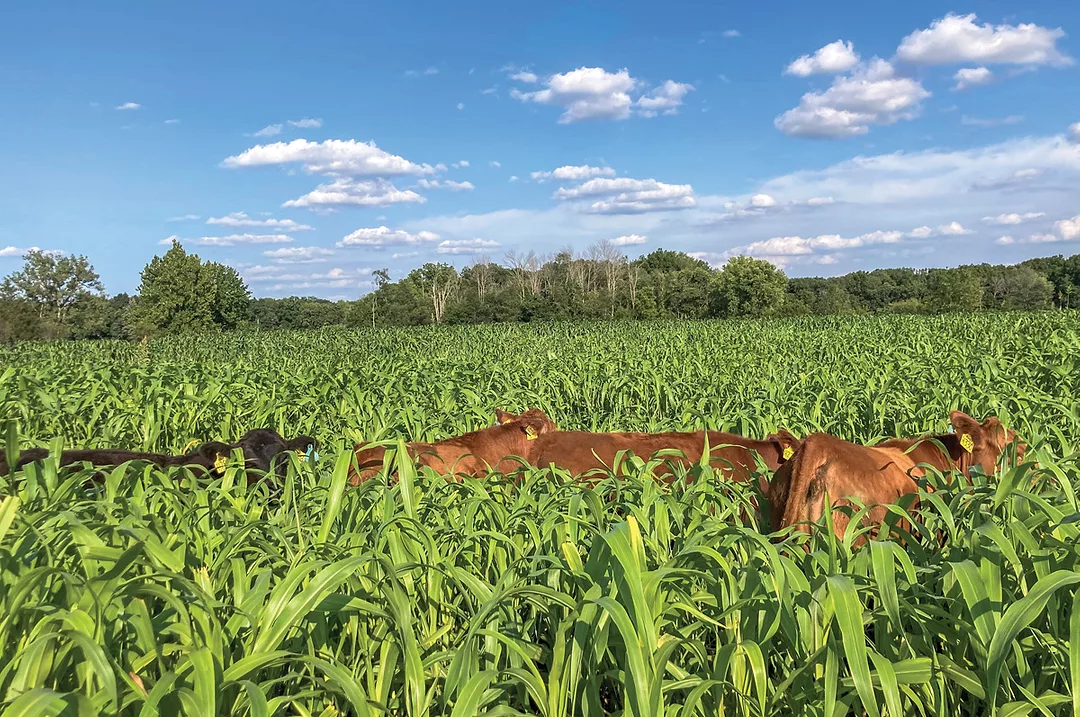
In recent years, producers across the Midwest have increasingly turned to sorghum species as a flexible forage option. Whether responding to excessive rainfall that left fields unplanted or managing through drought conditions, forage sorghum, sorghum-sudangrass and sudangrass offer drought tolerance, high yield potential and a short growing season, making them excellent choices for double cropping or emergency forage. However, these forages can also present risks due to prussic acid (hydrogen cyanide) toxicity.

While many producers don’t begin considering prussic acid concerns until fall, early awareness is essential. No matter how far off frost seems, planning ahead allows producers to have alternative forage strategies in place when it does occur. Understanding when, where and how prussic acid forms, and implementing best management practices, helps ensure these valuable forages are used safely and effectively.
What is prussic acid, and why does it matter?
Prussic acid is released when plant cells are damaged – through chewing, chopping or frost – causing the breakdown of a secondary compound called dhurrin into prussic acid. While dhurrin is associated with sorghum species, many other species can also release prussic acid – over 2,000 species in fact, with some commonly cultivated such as almonds, black cherry and cassava. When consumed in high enough concentrations, prussic acid interferes with the animal’s ability to use oxygen, leading to rapid symptoms such as respiratory distress, trembling, convulsions and sudden death.
Species, varieties and risk levels
Prussic acid potential varies significantly:
- Grain sorghum (milo): Very high risk
- Forage sorghum: High risk
- Sorghum-sudangrass: Moderate risk
- Sudangrass: Lowest risk
- Weed species such as johnsongrass and shattercane: Very high risk
Even within species, varieties differ in dhurrin content. Some new varieties are being developed to be prussic acid-free. Consult with your seed dealer to select a variety that meets your operation’s safety and productivity goals.
Factors that increase risk
Plant maturity and parts
Young plants under 18 inches tall contain the highest levels of dhurrin, particularly in leaf tissues. As plants mature, dhurrin levels dilute and risk decreases. Regrowth and tillers also tend to be high in dhurrin. Tillers are also commonly known as new shoots. Additionally, prussic acid concentration accumulates higher in the leaves compared to the stems. This may seem counterintuitive for those used to managing for nitrates, which accumulate in the stems. The younger leaves have the highest concentration, so dhurrin content generally increases in the upper portions of the plant.
Environmental conditions
- Frost: One of the greatest risks in the Upper Midwest. Frost-stressed sorghum can spike in prussic acid concentration for several days.
- Drought stress: Drought can cause an increase in prussic acid potential. Signs of drought stress include rolling leaf. Drought-stressed plants can also be high in nitrates.
- Excessive nitrogen fertilization: Increases dhurrin concentration, especially when paired with drought, but typically the combination of drought and excessive nitrogen fertilization has a greater risk of nitrates.
Safe management strategies
Grazing
Generally, grazing is considered one of the riskier options when there is a high prussic acid potential. This is because animals selectively graze leaves over stems. To minimize the risk of prussic acid toxicity, grazing management is critical. Producers should wait until sorghum plants reach at least 18 inches in height before allowing livestock to graze. Following a frost event, animals should be removed from the pasture and kept off for at least seven days. If another frost occurs during that time, the seven-day waiting period resets. After a killing frost, it is recommended to wait another full week before grazing. When introducing animals to sorghum pastures, they should be observed closely for any signs of distress. Feeding hay beforehand can help prevent overconsumption of high-risk plant parts due to hunger. In some cases, using a tester animal may help verify forage safety before turning out the entire herd.
Hay
Contrary to previous belief, sun-curing does not reliably reduce prussic acid levels. Dhurrin can remain stable for over two months in dried forage. In fact, drying reduces water content, potentially increasing prussic acid concentration on a dry matter basis. Avoid cutting after frost events, and ensure plants are mature.
Silage and baleage
Ensiling is the safest method. The chopping and fermentation process can reduce prussic acid levels by 50% or more. Well-managed silage and baleage allow for safe and nutritious sorghum forage use.
Clinical signs and diagnosis
Signs of prussic acid poisoning in cattle typically appear within minutes to hours. They include:
- Labored breathing
- Muscle tremors or staggering
- Convulsions
- Sudden death
Bright “cherry red” blood and an almondlike odor may be present, but these are not reliable diagnostic criteria. Due to the rapid nature of intoxication, animals are often found dead with few external lesions.
Suspected cases should include submission of:
- Blood
- Frozen rumen content
- Liver tissue
- Suspect forage samples
Samples should be sealed in airtight bags, kept cold and submitted promptly to a diagnostic lab.
There are also at-home forage test kits, sold by Ward Laboratories Inc. and similar companies. These kits will give producers an idea of the level of risk prior to harvest.
In summary, here are some key takeaways to manage sorghum forages safely:
- Do not graze sorghum species until they are over 18 inches tall
- Remove livestock for one week after each frost event
- Test forage when in doubt
- Avoid overfertilization with nitrogen
- Silage and baleage are safest when prussic acid is a concern
Sorghum is an adaptable, high-value forage option, but it needs to be managed carefully to avoid prussic acid poisoning. By following these guidelines, producers can safely incorporate sorghum into their grazing and forage systems.