Lactose-free. Emotional well-being. Net zero. Global marketplace. With so many buzzwords and trends that are part of consumers’ purchasing decisions, it can be difficult to picture what the next 20 years of dairy looks like. How do we keep dairy included in the right conversations? How do we grow export markets? How do we focus on climate-smart solutions while keeping our farms economically viable?

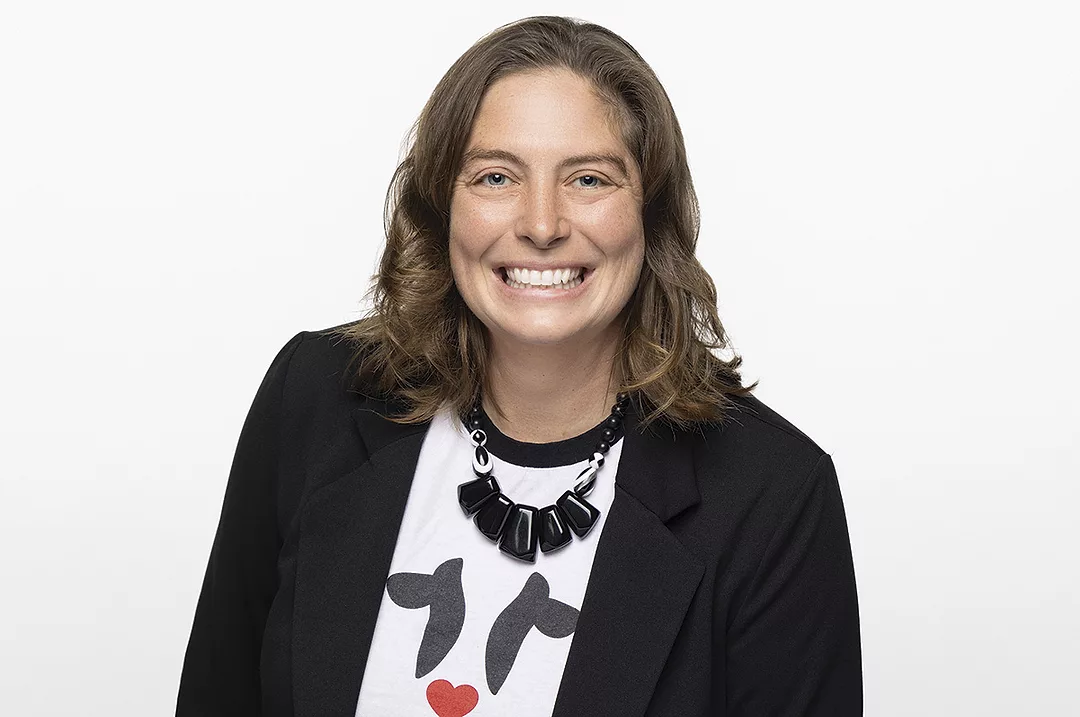
At Penn State Extension’s Women in Dairy Conference held on Nov. 19, 2024, Joanna Shipp, a seventh-generation dairy farmer from Virginia and chair of the National Dairy Promotion and Research Board, reflected on what the next 20 years of dairy could look like in the U.S.
Export market growth
The U.S. dairy industry has a long history of growth fueled by both domestic and international markets. Over the next 20 years, Shipp predicted that export markets will continue to be a major driver for U.S. dairy, along with international markets.
“One day a week, all the milk in our country goes off our shores. What would happen if the milk we export now stays in the United States? I think exports are only going to get bigger for us,” Shipp said.
With new funding from the USDA through the Regional Agricultural Promotion Program (RAPP), international market development can become a priority – including seeking opportunities beyond traditional markets (such as Canada, Mexico, China, etc.) to reduce reliance on these regions.
“The program is specifically designed to help give us money to look at other markets,” Shipp added.
Within the U.S., Shipp said there are opportunities to strengthen ties and overall collaboration to boost our nation’s exports. This might include partnering with leading academics and dairy cooperatives to implement technical training programs for small-scale farmers or enhancing local dairy production capabilities and milk powder exports from U.S. suppliers.
Beyond our borders, Dairy Management Inc. (DMI) works to strengthen international ties by partnering with brands such as Domino’s and Pizza Hut to help pizza consumption grow beyond the U.S. By getting American milk and cheese on pizzas in other countries, this could lead to additional opportunities to grow our export markets.
Health and wellness opportunities
With the U.S. health and wellness market valued at $480 billion – and experiencing an impressive annual growth of 5% to 10% – it’s clear that consumers are prioritizing nutrition in their purchasing decisions.
“There is a dairy renaissance right now. Millennials are rediscovering the goodness of real foods, and dairy is a big part of that,” Shipp said.
By promoting dairy as an essential component of a healthy lifestyle and educating consumers about the nutritional benefits of dairy, Shipp said she thinks the U.S. dairy industry needs to continue investing in research over the next 20 years. It’s also important for dairy to stay part of consumers’ conversations when it comes to popular topics such as heart health, healthy weight, mental and emotional health, strong performance and more.
“A poll says 86 percent of people agree that mental and emotional balance is just as important as physical health. ‘Food is medicine’ is a very popular phrase. People are looking for very functional things in their life,” Shipp explained.
Lactose intolerance is also increasing across the globe. The lactose-free category is one of the top-growing categories in the marketplace and could offer a real opportunity for the U.S. dairy industry in the next 20 years.
“A large percentage of the world is lactose intolerant, so how do we reach those people who can’t typically consume the product we’re making? If we now have processes that can remove the thing [lactose] that they can’t consume, it’s a no-brainer,” Shipp said.
Climate-smart initiatives and community-minded approaches
When it comes to net zero conversations, dairy farmers on the DMI board work with global policymakers to showcase U.S. dairy as a climate-smart solution and facilitate open dialogue with key stakeholders in the global dairy and agriculture sectors.
“We want to help inform and influence agriculture’s national narrative. If we don’t do that now, somebody will make a decision that’s not always in our best interest. We have to be part of these conversations,” Shipp said. “We’re building the blocks. If we don’t do it now, we’re going to be behind in 20 years.”
Shipp said she believes a collaborative, community-minded approach could help the U.S. dairy industry achieve net zero carbon emissions by 2050.
“Not every farm is going to have a methane digester or do a feed additive, but every farm can do something. Maybe your farm switches all your lights to LED or you try no-till and cover cropping. All of those practices help get us further along [over the next 20 years],” Shipp said.
The financial investment for climate-smart practices can often be large and unmanageable for many dairy farmers. Through programs such as the FARM Program, Shipp said dairy farmers can make sure climate-smart practices are not only environmentally friendly but economically viable for their business.
“We want to do climate-smart practices, but a sustainable farm is one that makes money. If we’re not making money, we’re not going to be farming now and 20 years in the future. I love milking cows, but if I have to get another job, milking cows becomes a hobby. That’s not economically viable,” Shipp said.
To help with the economics behind some of these climate-smart initiatives, the FARM Program has completed over 4,300 environmental stewardship assessments to date. Through these assessments, a farm’s footprint can be broken down into categories such as on-site enteric, on-site energy use, on-site manure and feed production. If a farm has a climate-smart practice they’re considering, they can use FARM’s models to evaluate how much it will cost and weigh the benefits.
While the future is always difficult to predict, the next 20 years of dairy are filled with growth opportunities if we take the steps today and utilize the tools available to secure them.